Art of the March
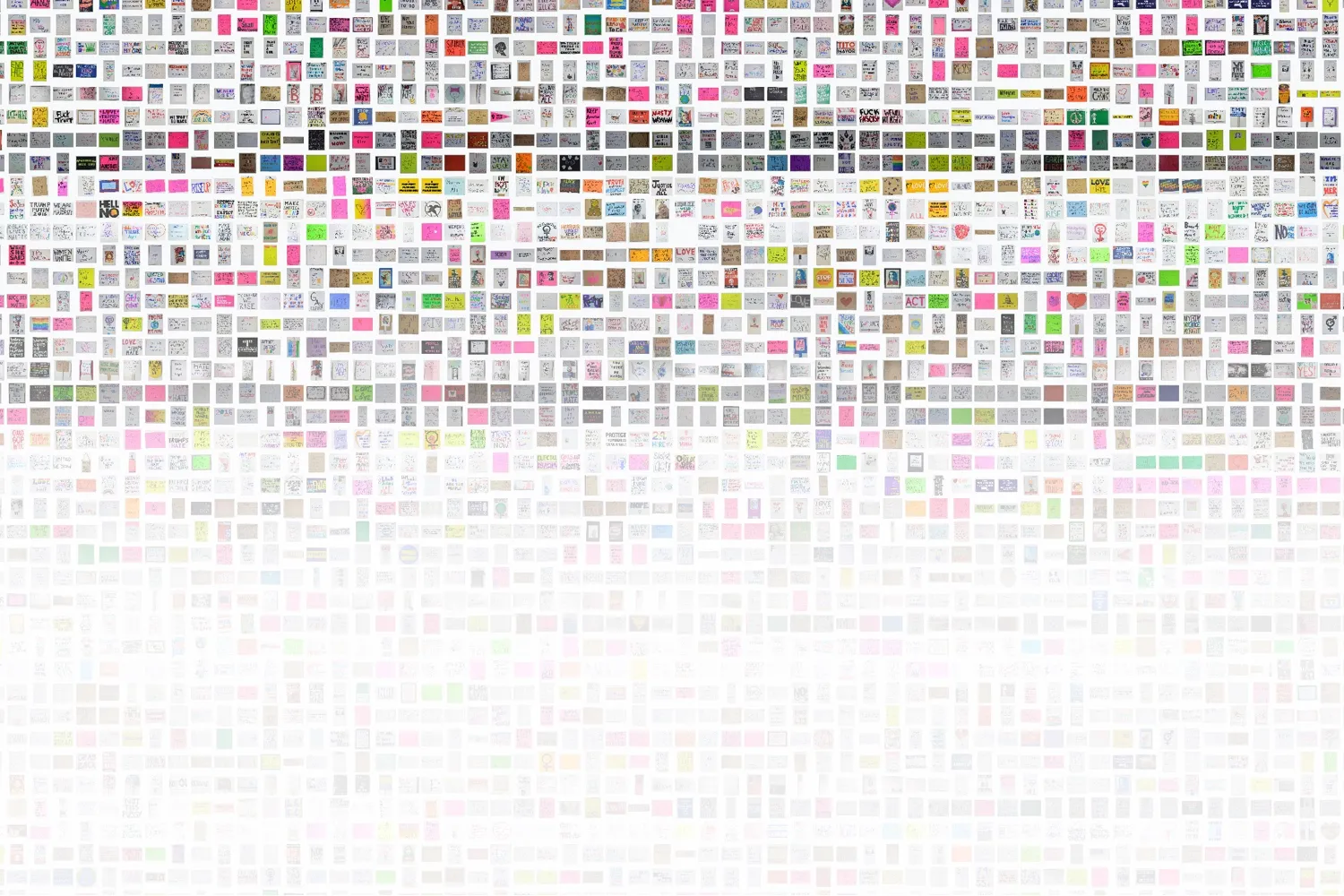
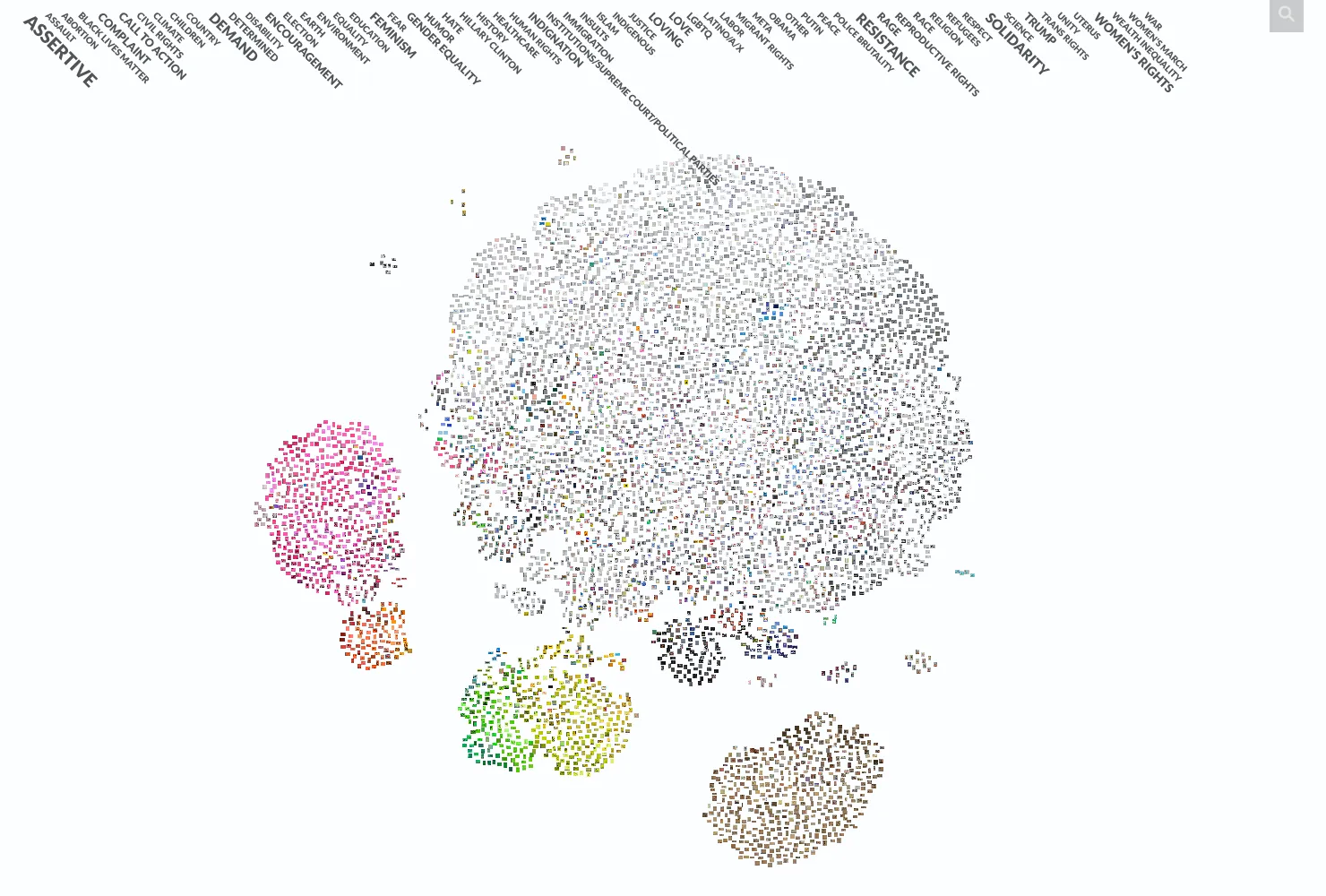
The visual interface of the Art of the March archive: 5,949 protest signs from the 2017 Women's March in Boston on one zoomable wall, filtered by keyword.
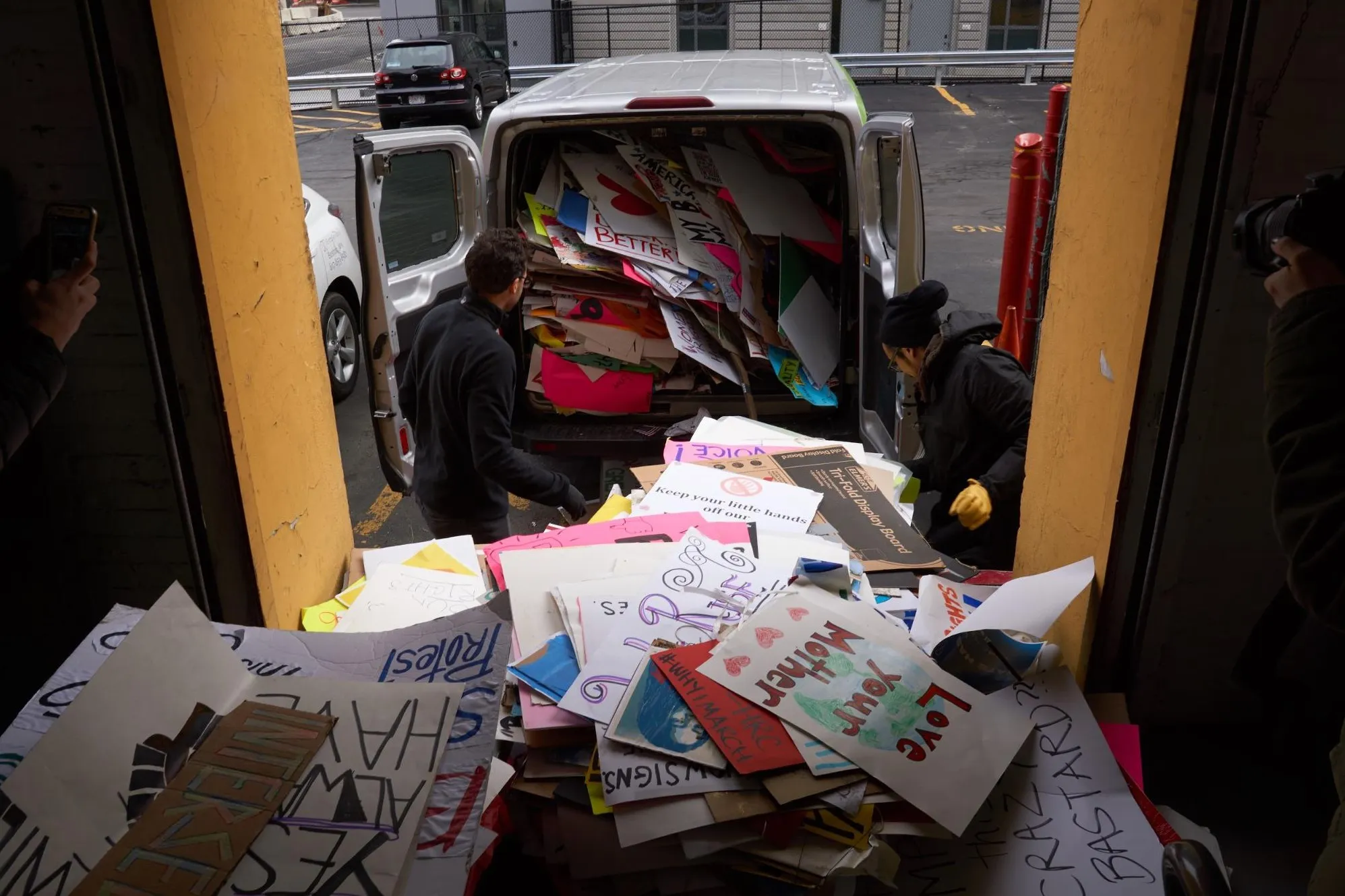
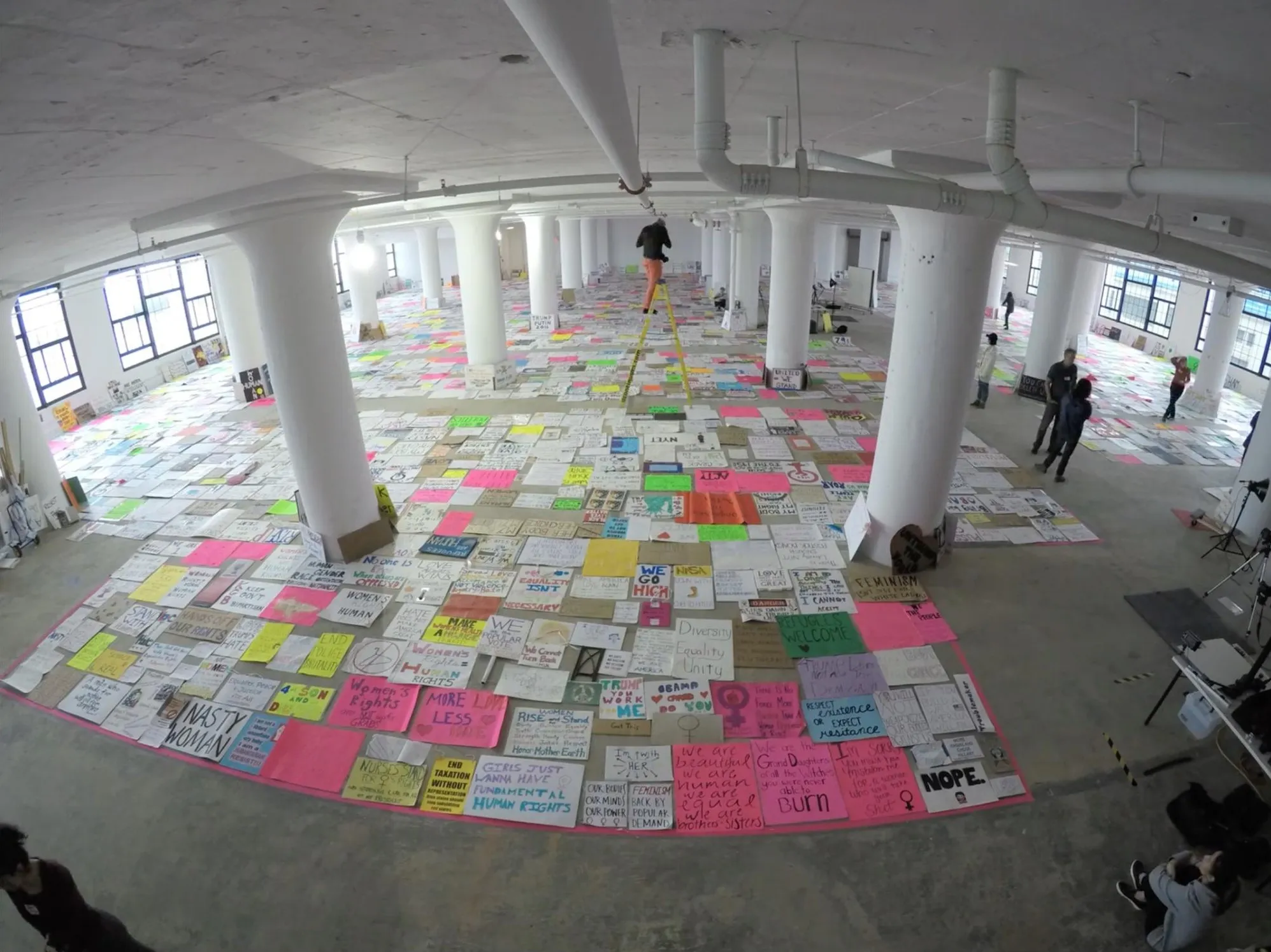
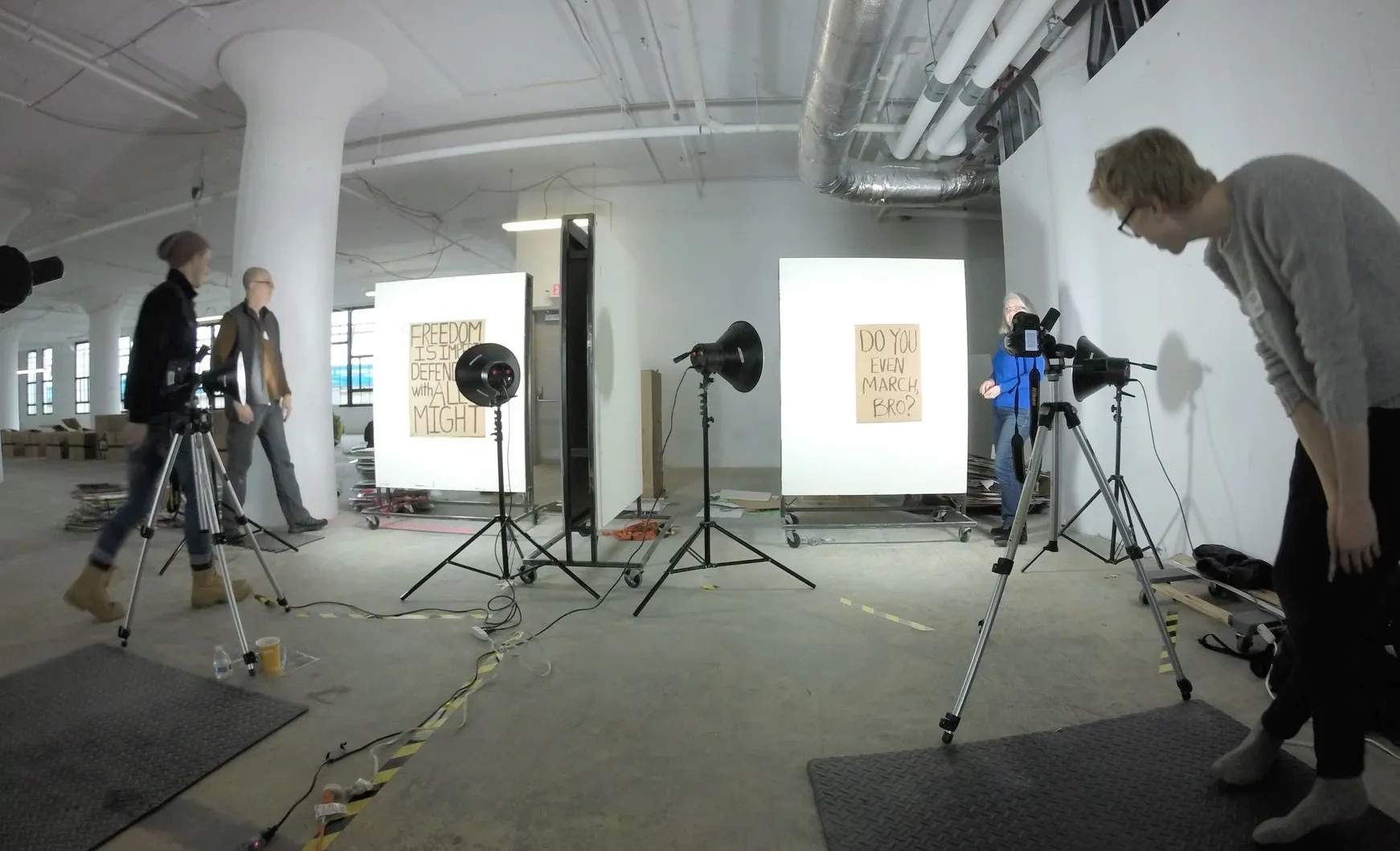
On January 21, 2017, the day after Donald Trump’s inauguration, between 150,000 and 175,000 people joined the Women’s March on Boston Common. When it ended, protesters left their signs along the iron fence of the Central Burying Ground, an ephemeral monument that city parks workers were about to clear away. The project’s initiators, Alessandra Renzi, Dietmar Offenhuber and Nathan Felde, asked for permission to collect the signs instead. Volunteers loaded them into a rented van, and in April 2017 more volunteers photographed and cataloged them at a weekend documentation event. The result, Art of the March, is an online archive of more than 6,000 handmade signs, which the team describes as the most extensive collection of contemporary protest signs from a single event of this scale.
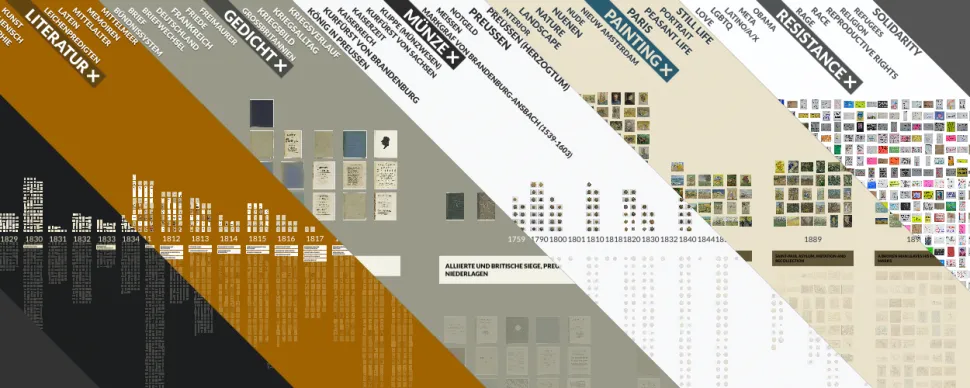
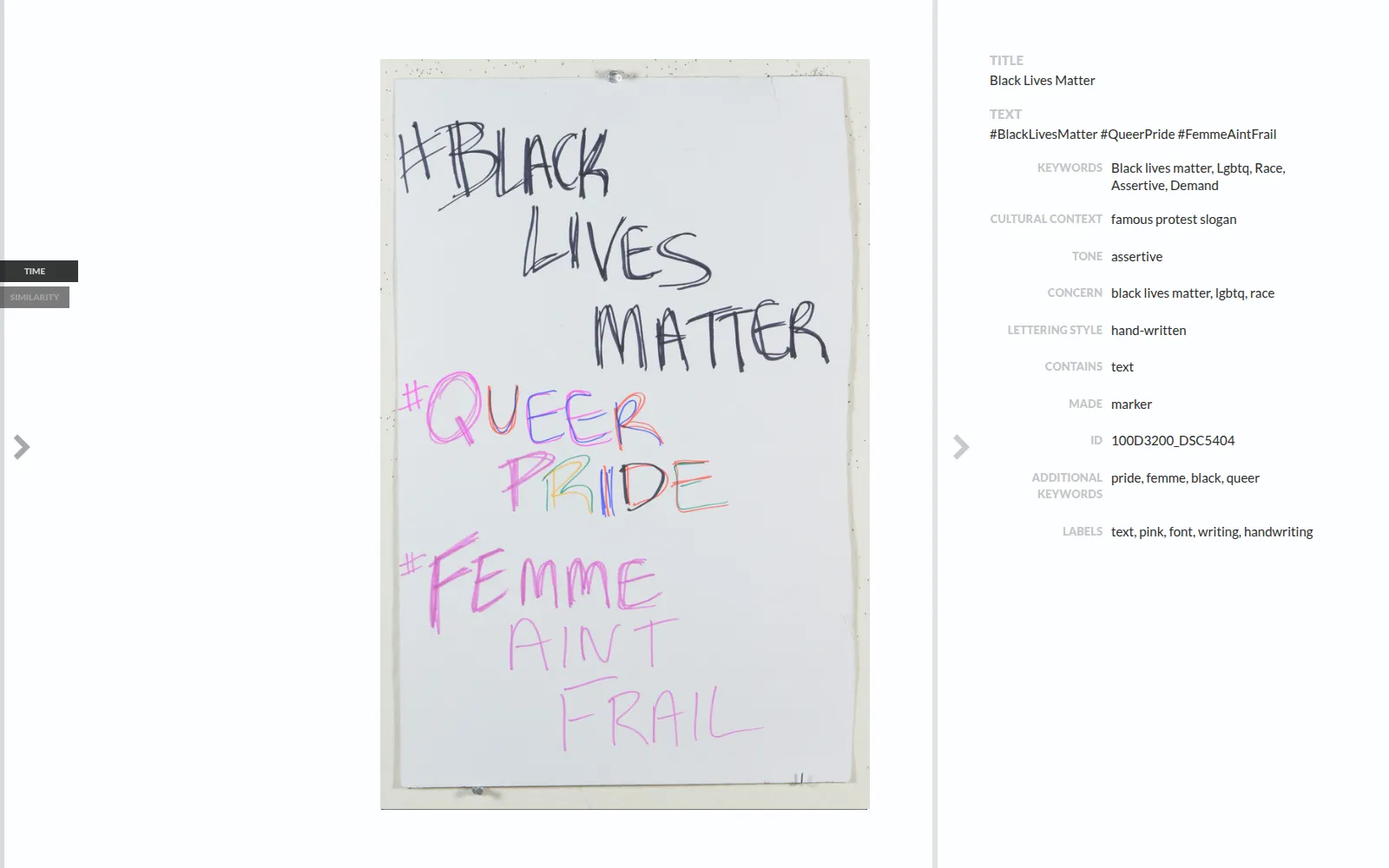
I met Dietmar Offenhuber in Boston and showed him VIKUS Viewer; afterwards he approached me about building the archive’s visual interface with it. The interface places 5,949 signs on one zoomable canvas under a row of keywords (resistance, solidarity, reproductive rights, Trump and many more) that narrows the wall down by theme. Each sign opens a record with its text and the team’s annotations: what it shows, its tone, concern, cultural context, lettering style and materials. In 2019 I added a second layout that groups the signs by visual similarity, recomputed as a UMAP projection in 2021. The deployment’s configuration and data files are on GitHub.
In 2018 the archive was shortlisted for the Information is Beautiful Awards and shown at the IEEE VIS Arts Program in Berlin. Grace Van Ness and Prakash Krishnan interviewed five members of the team, me among them, for a chapter of Design and Political Dissent (Routledge, 2021). The archive’s own website is offline now, but the visual interface still runs.
Images
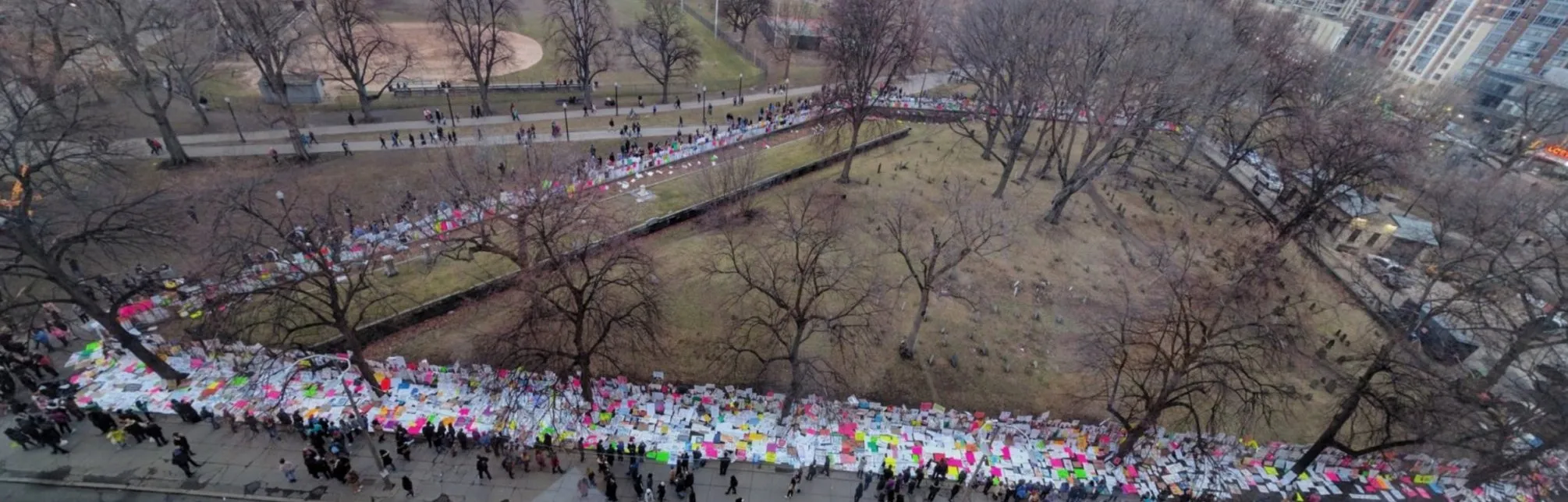
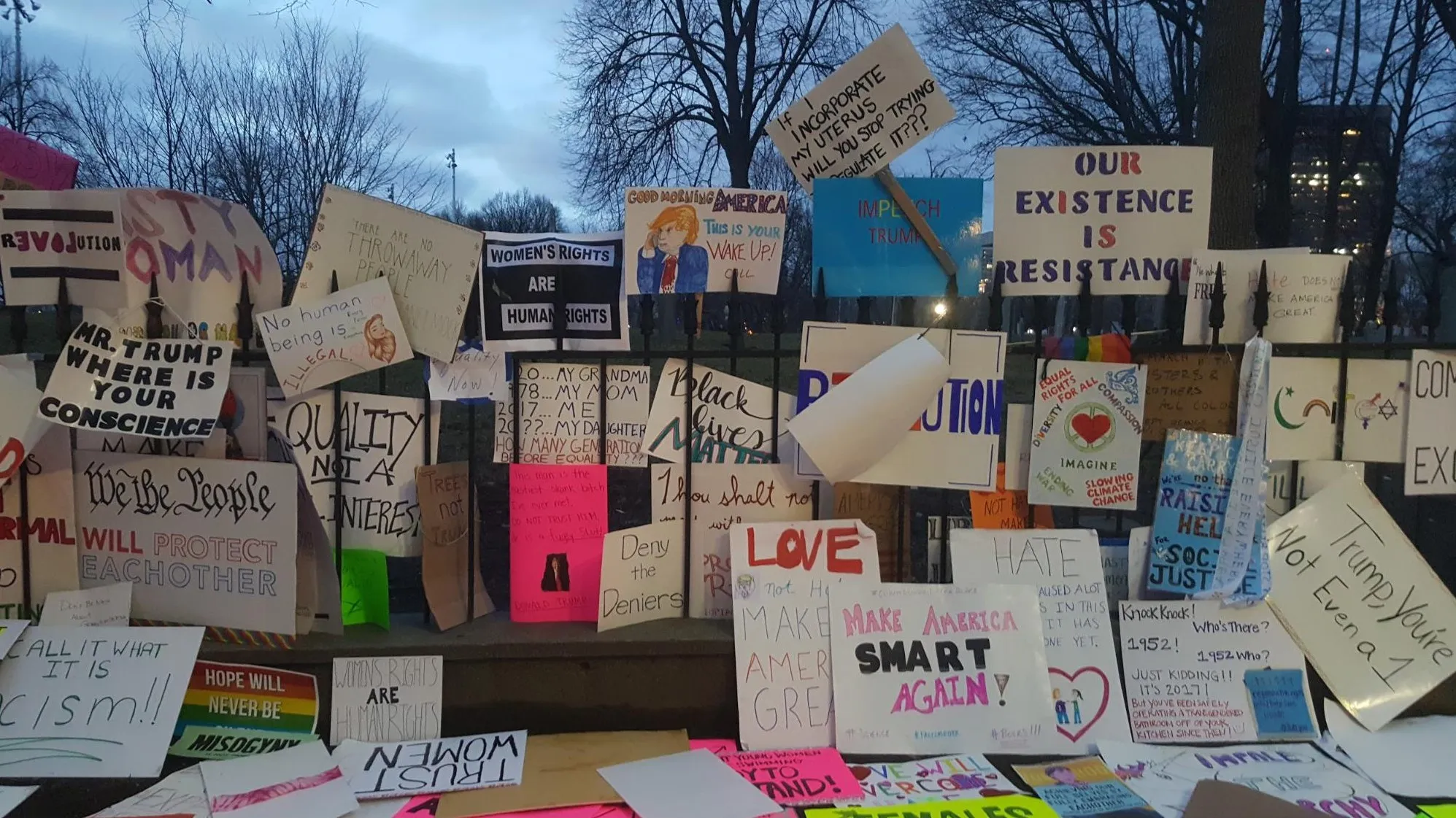


Boston Common, January 21, 2017
Images: Source: offenhuber.net · Art of the March, CC BY 4.0
Left and right arrow keys flip through the pile, Enter enlarges the top image.