Transferscope: Synthesized Reality
A handheld AI camera that turns the surrounding environment into a tangible prompt for generative image synthesis.
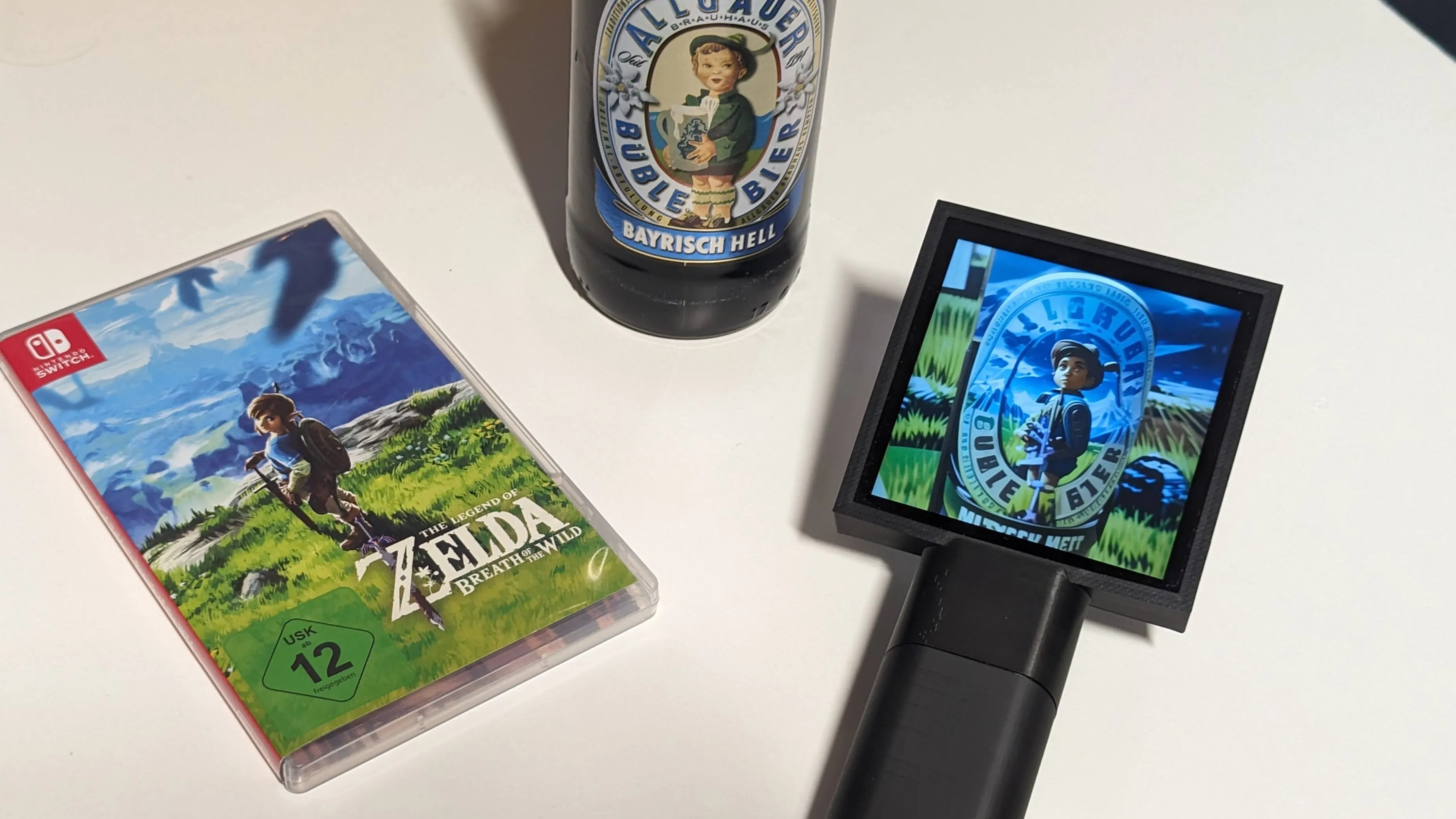
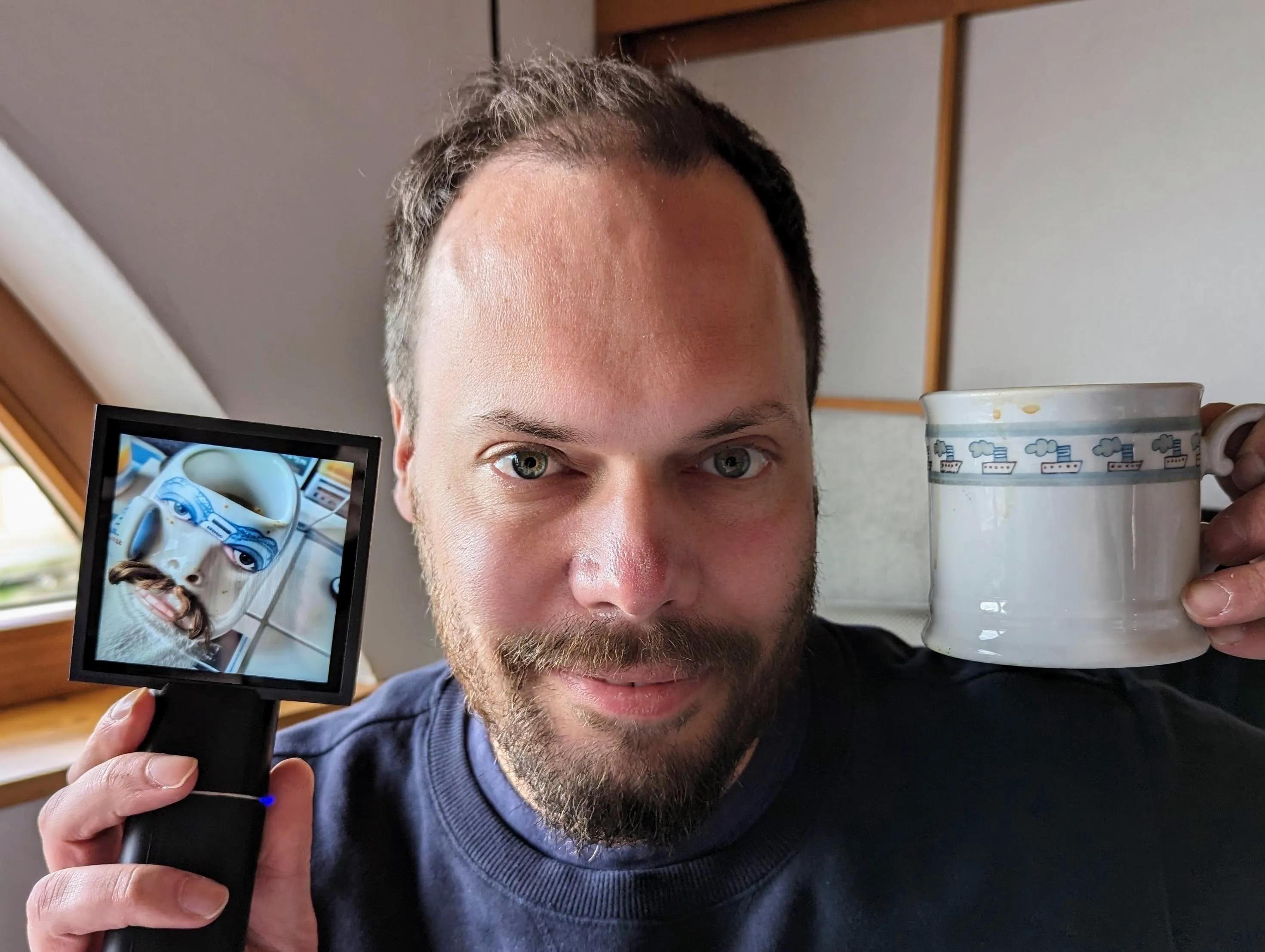
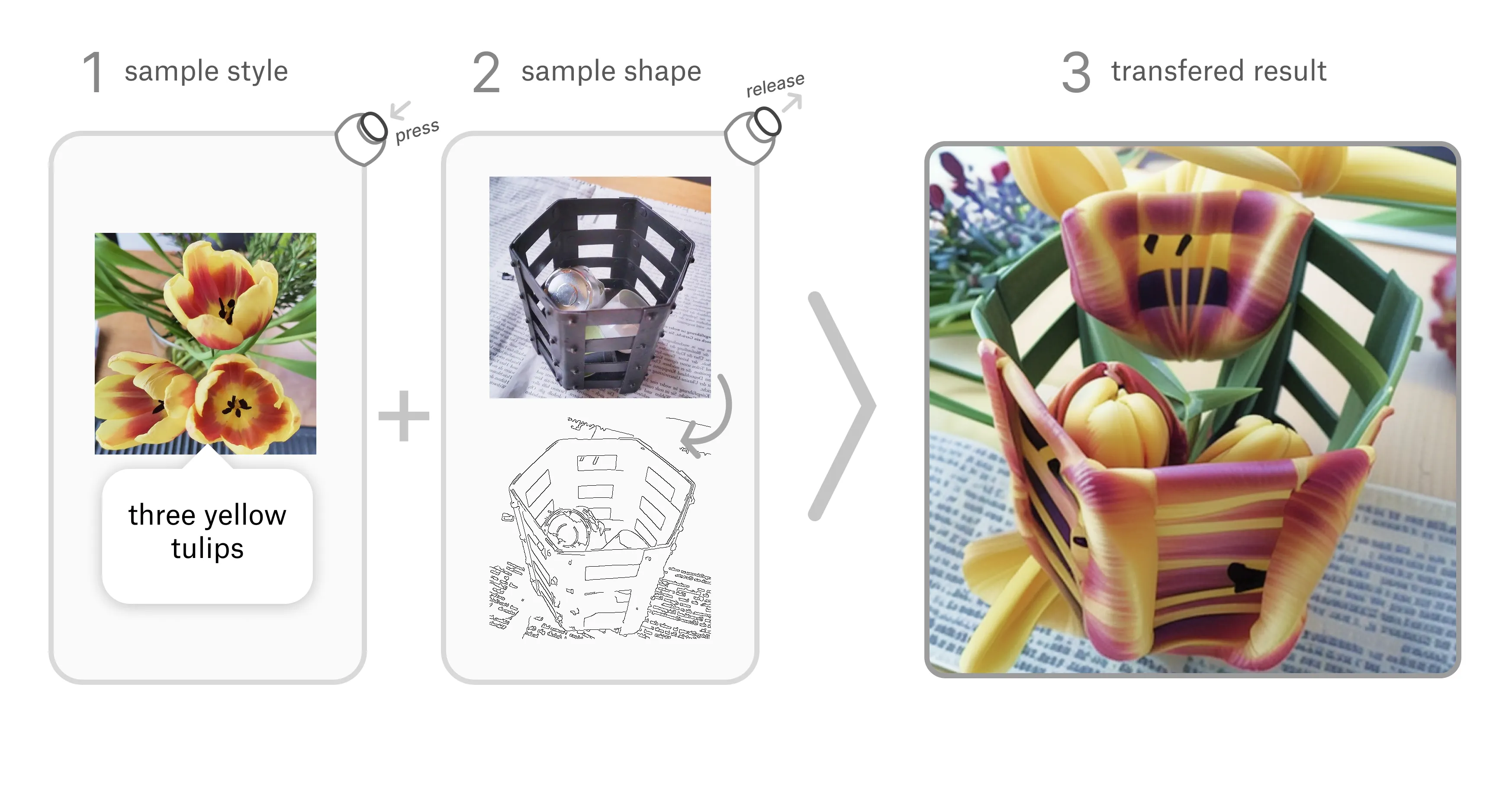
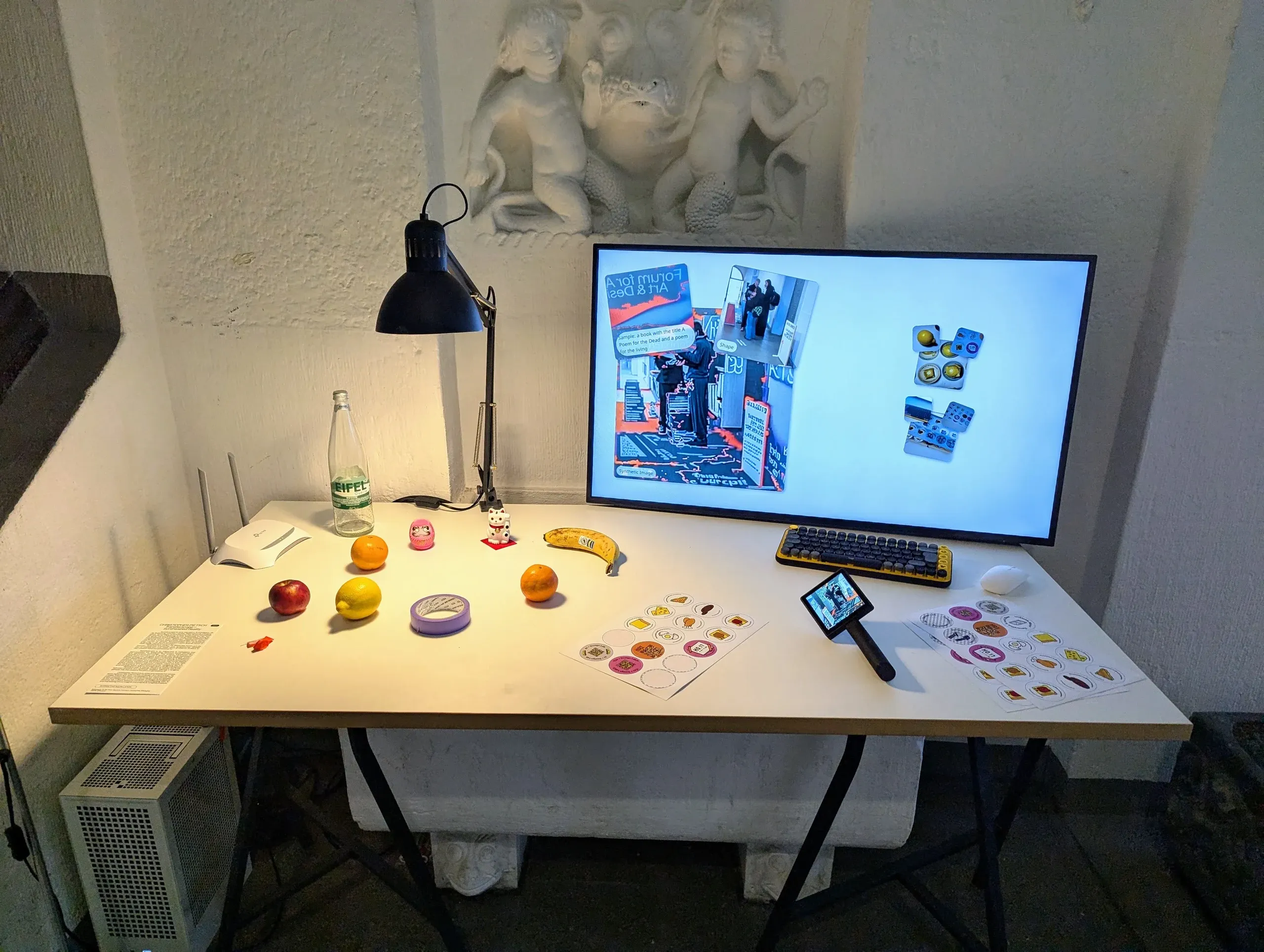
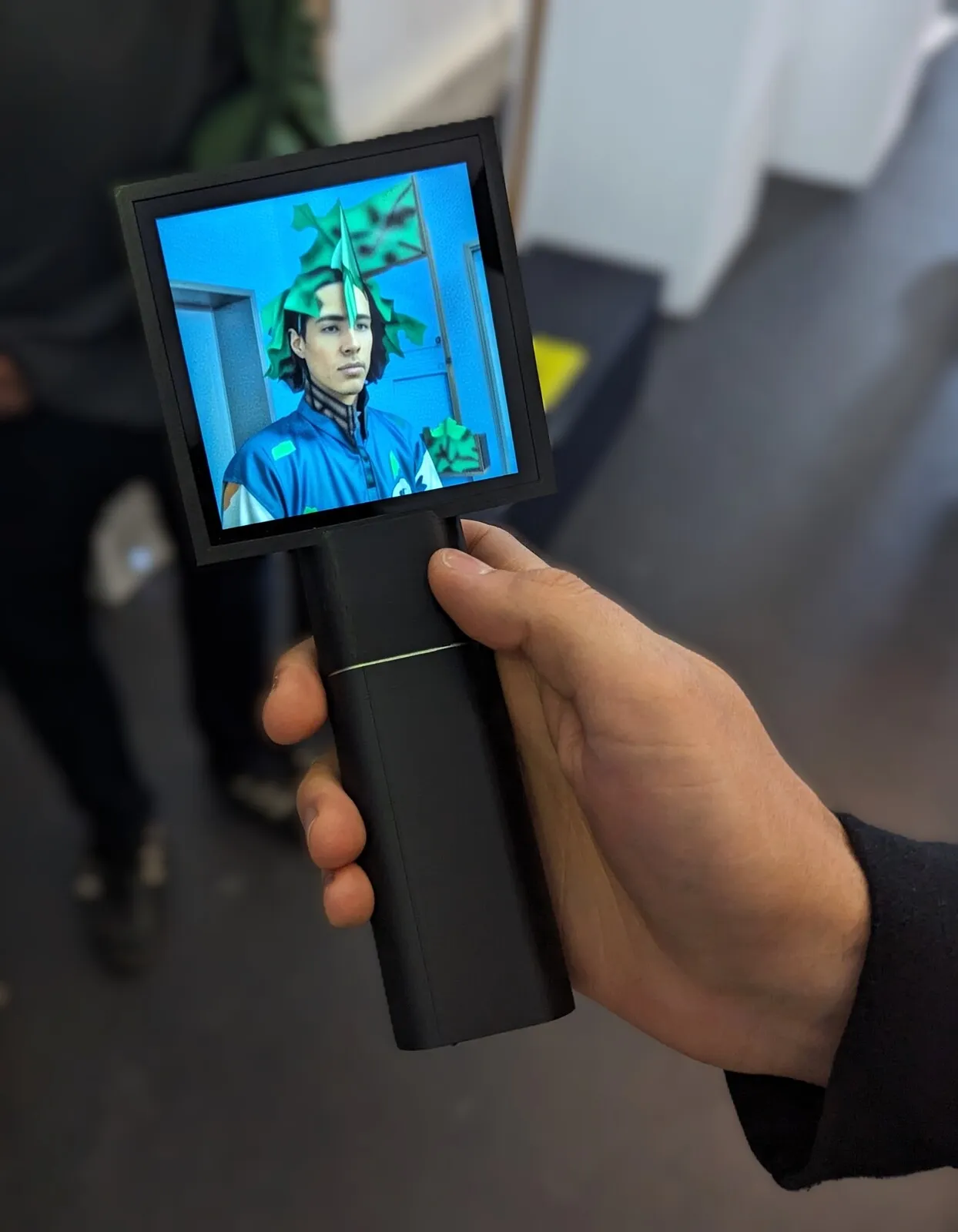
What if the environment itself could become a prompt? Transferscope is a handheld AI camera: you point it at the world, capture what interests you, and the device resynthesizes the scene through a generative image model. Looking and framing replace the keyboard; the act of seeing becomes the starting point for creation.
The project began at the AI+D Lab at HfG Schwäbisch Gmünd, where I came in 2023 for a six-month residency and then stayed on as a creative technologist until the KITeGG project ended. I was exploring generative image synthesis with Stable Diffusion. I wanted to shift the interaction away from text-based prompting toward something embodied: a physical tool mediating between you, your surroundings, and the model.
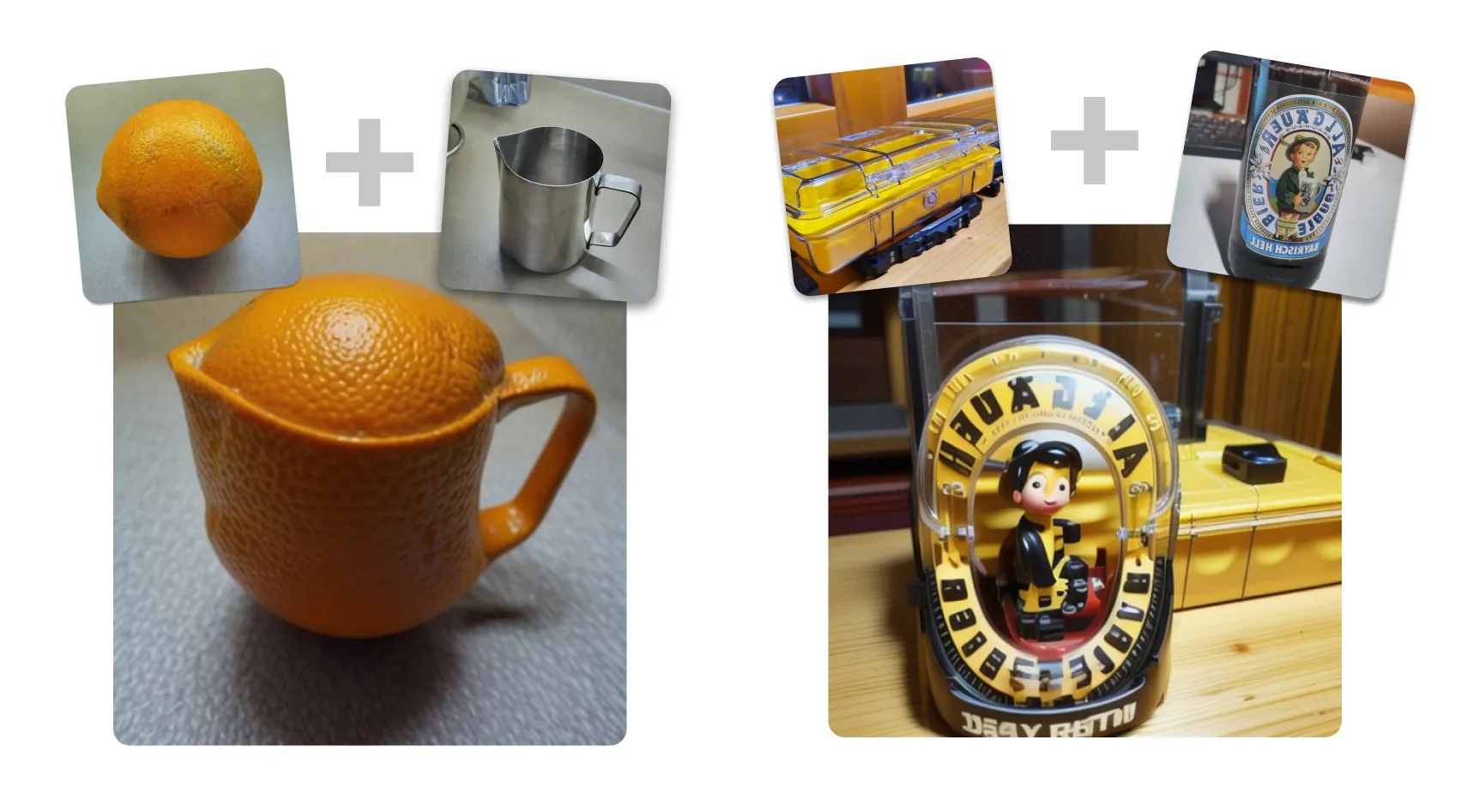
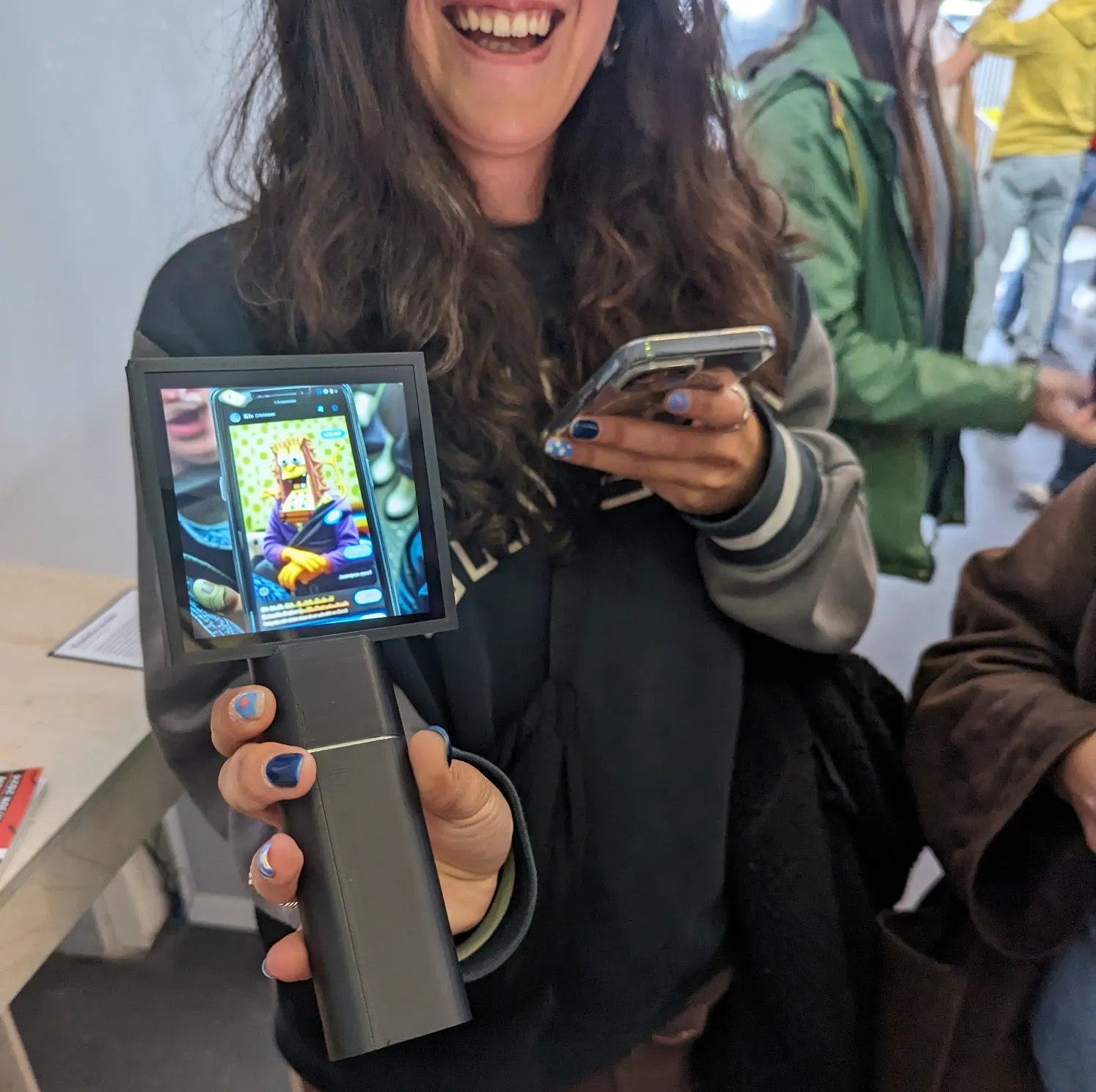
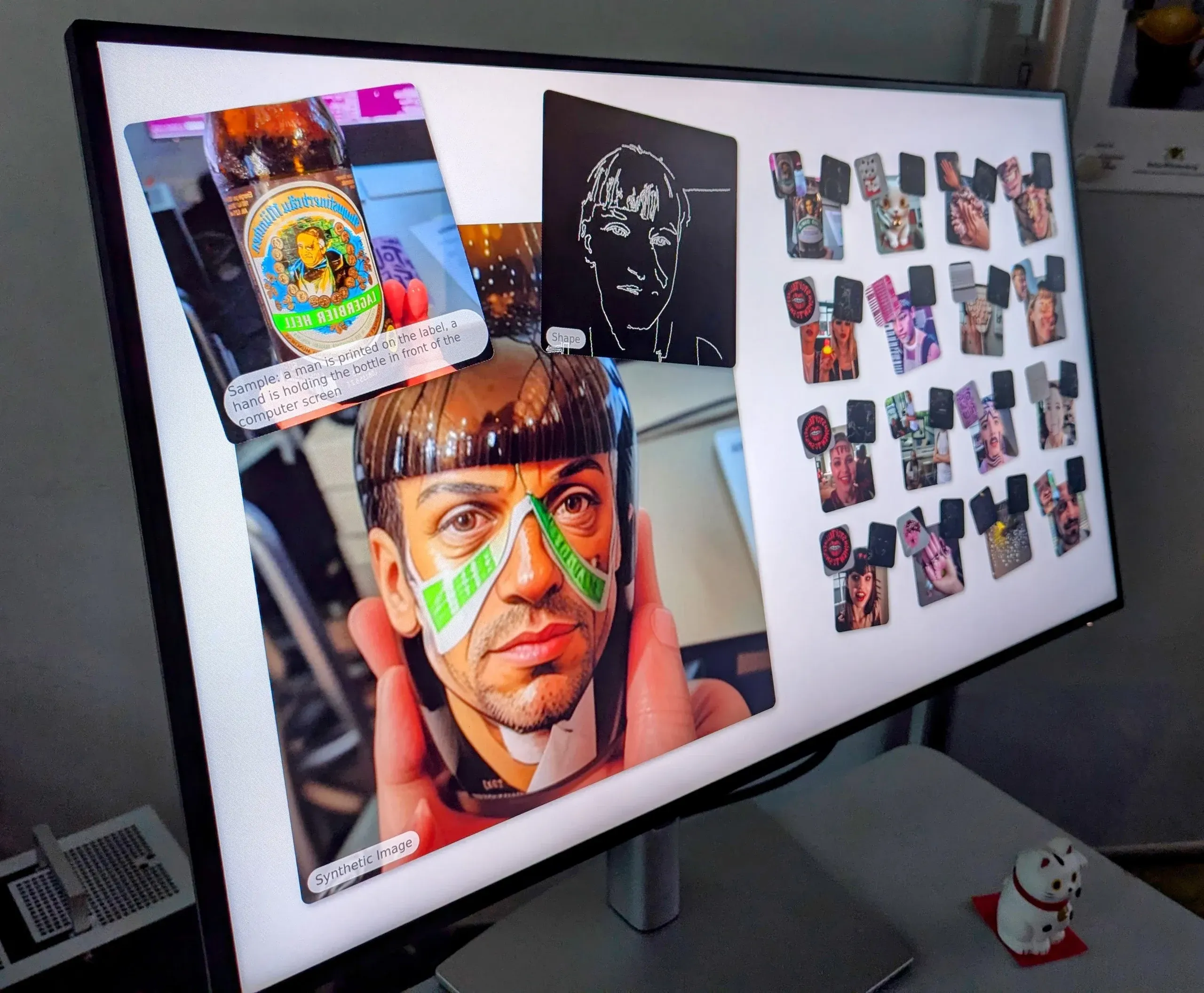
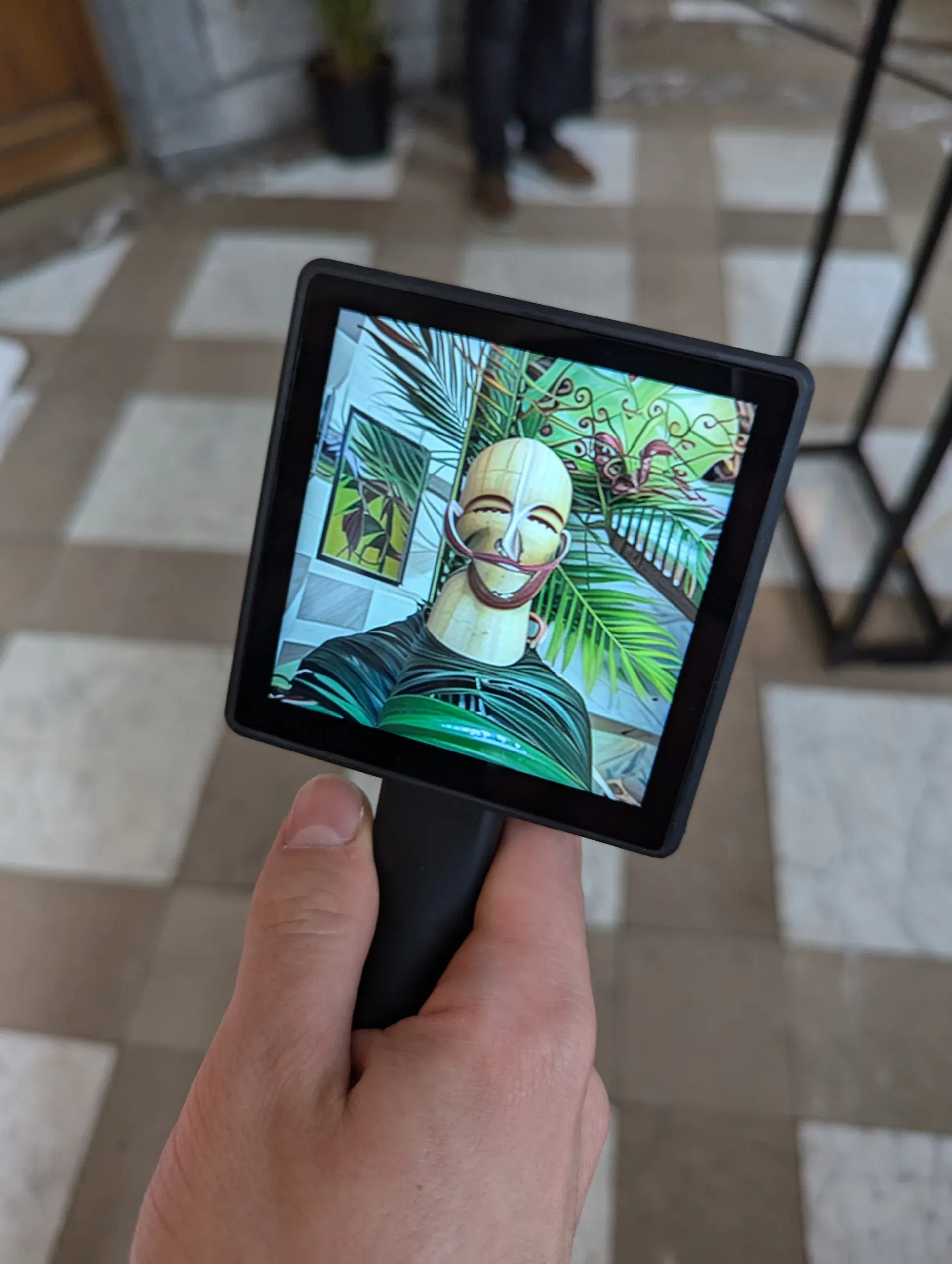
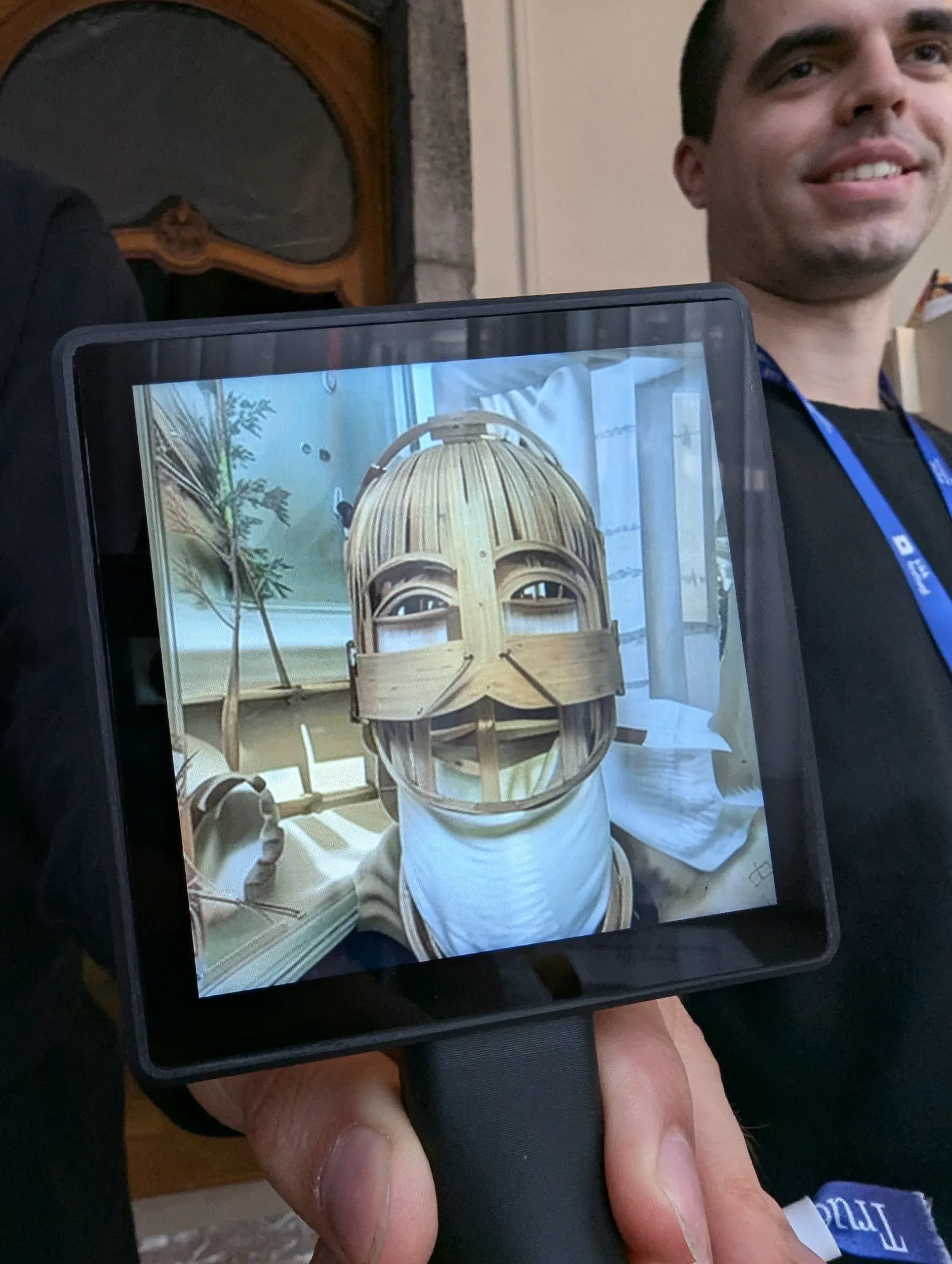
Transferscope makes that mediation tangible. A camera captures the scene in front of the device, a diffusion pipeline interprets it, and the transformed image returns on the integrated display, immediate enough to feel like photography, strange enough to keep you improvising. You sample and remix reality through an AI-driven lens.
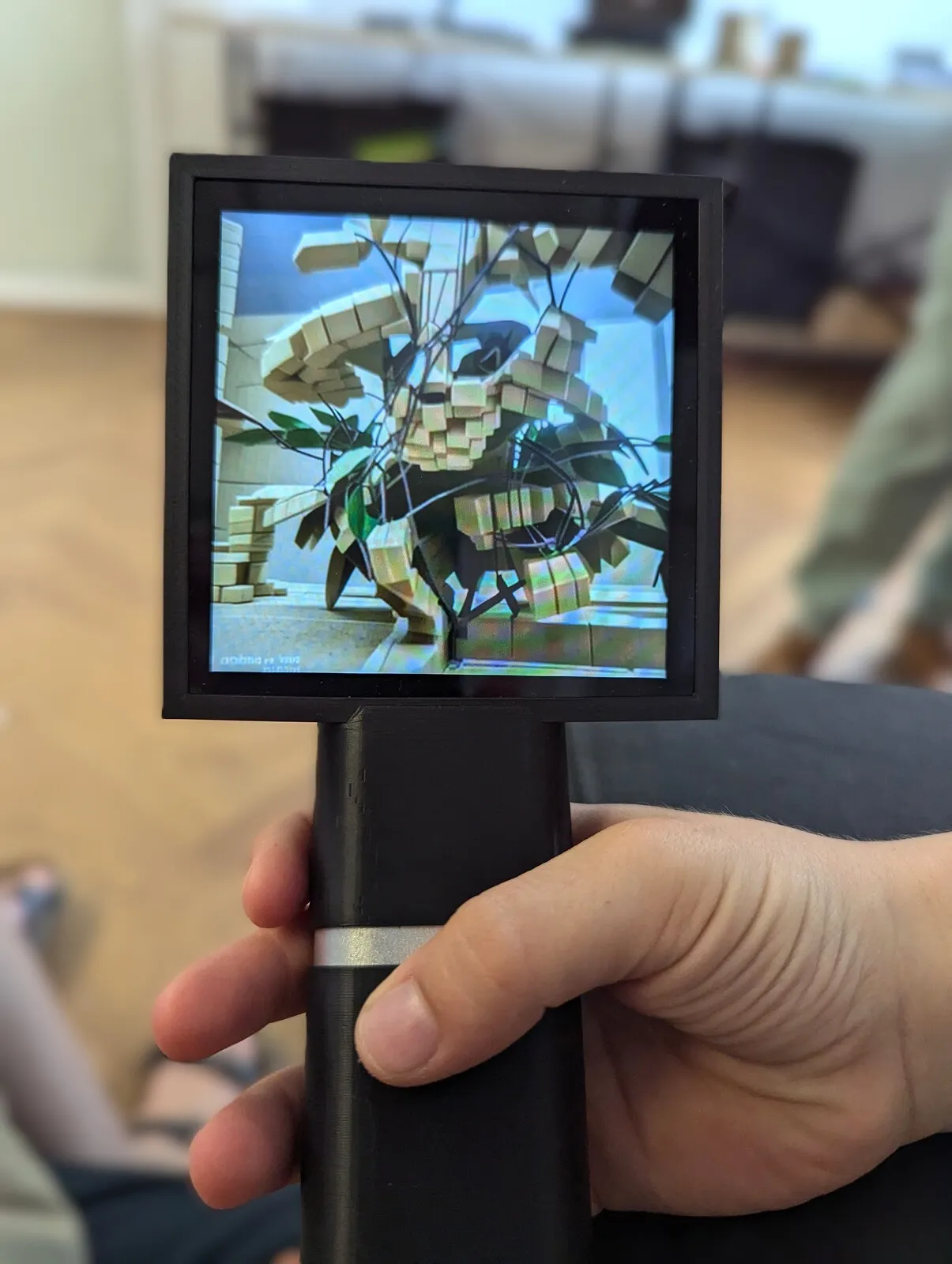
The device deliberately preserves a specific technological moment: the raw, unpredictable quality of 2023-era models like Stable Diffusion 1.5, with the small distortions and ambiguities that defined early image synthesis. These imperfections are central to the project. They introduce uncertainty, reward experimentation, and keep the system feeling like a creative material rather than a polished product, a stage of AI image-making when the technology’s potential was still intertwined with its errors.
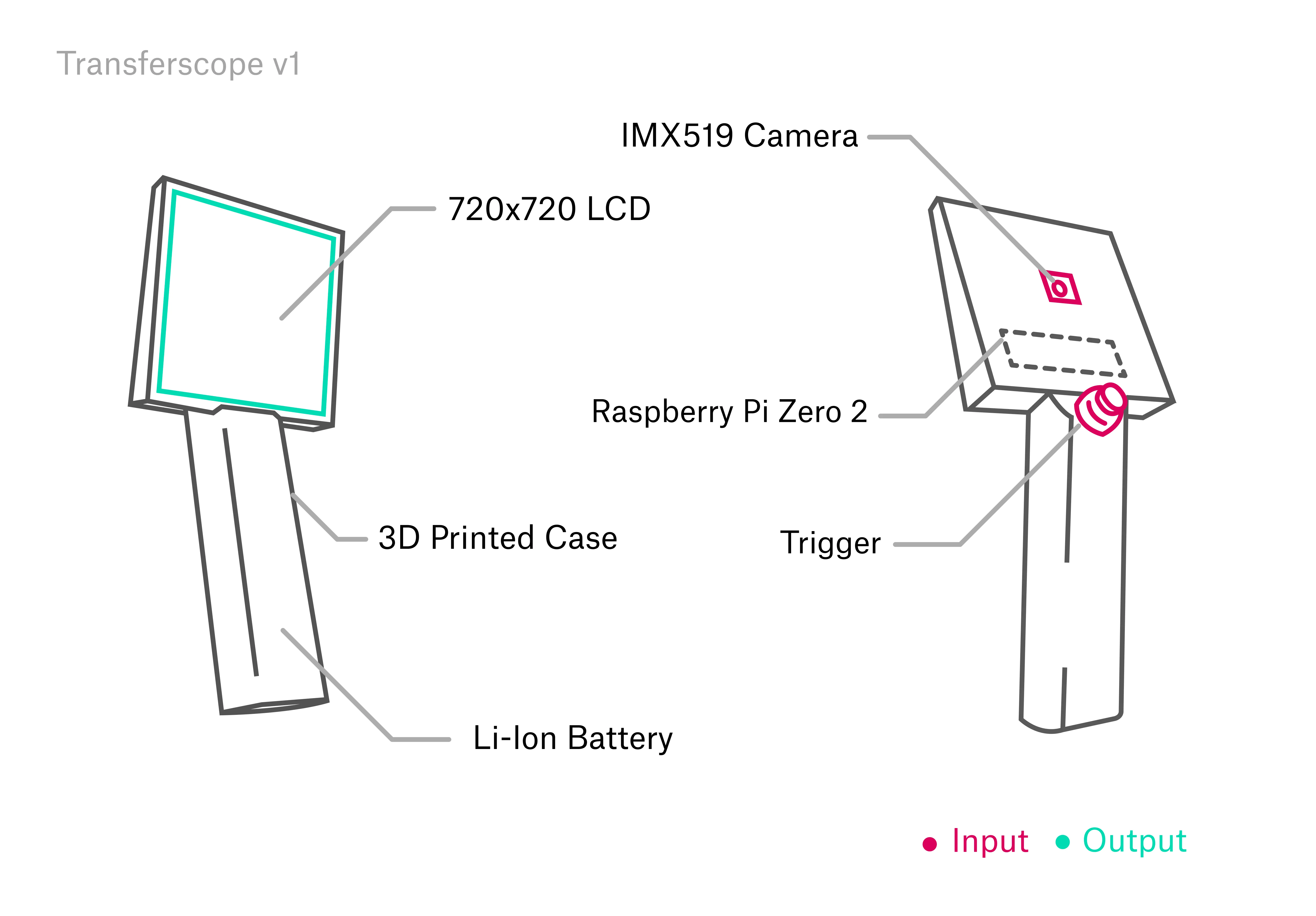
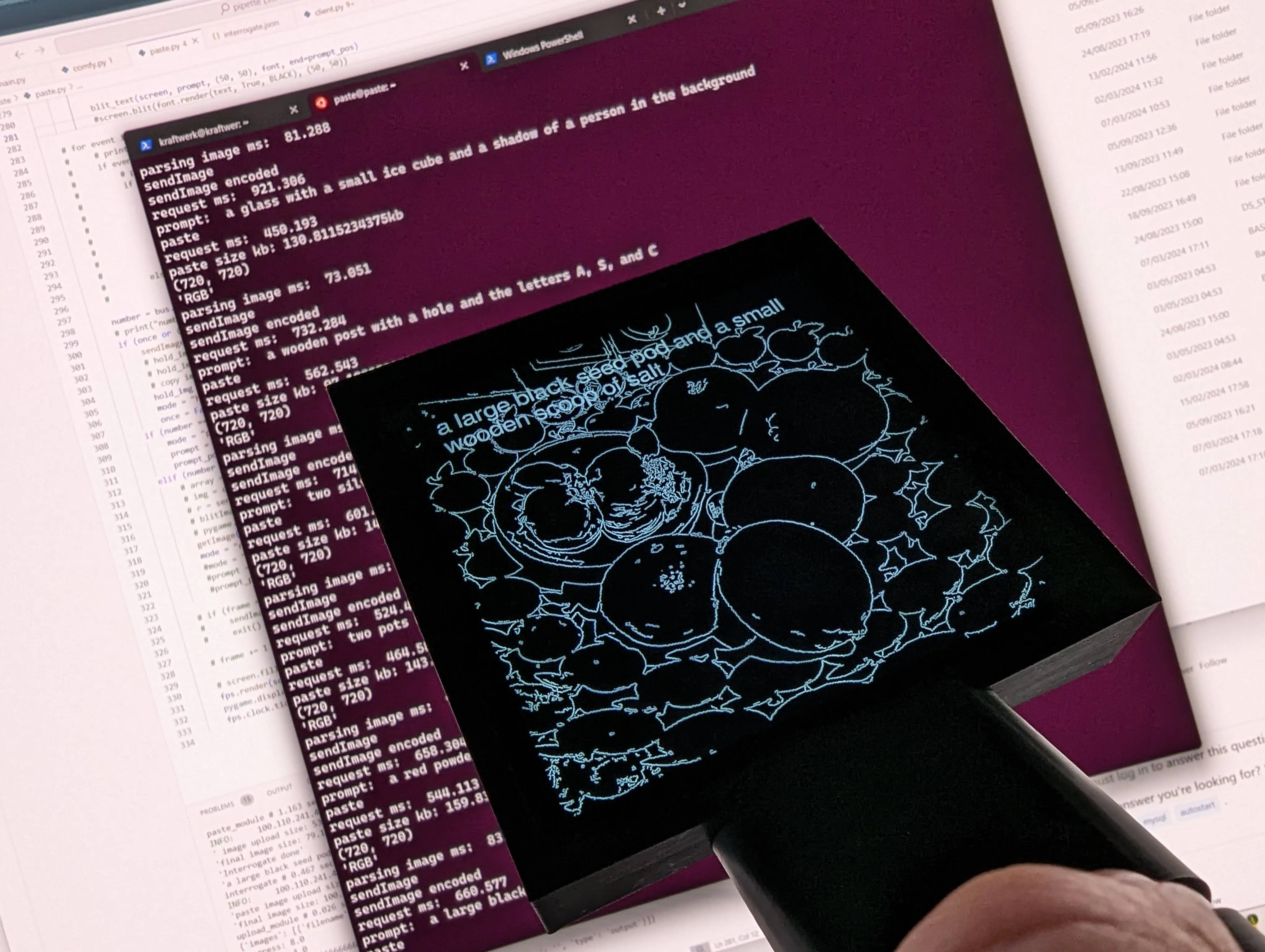
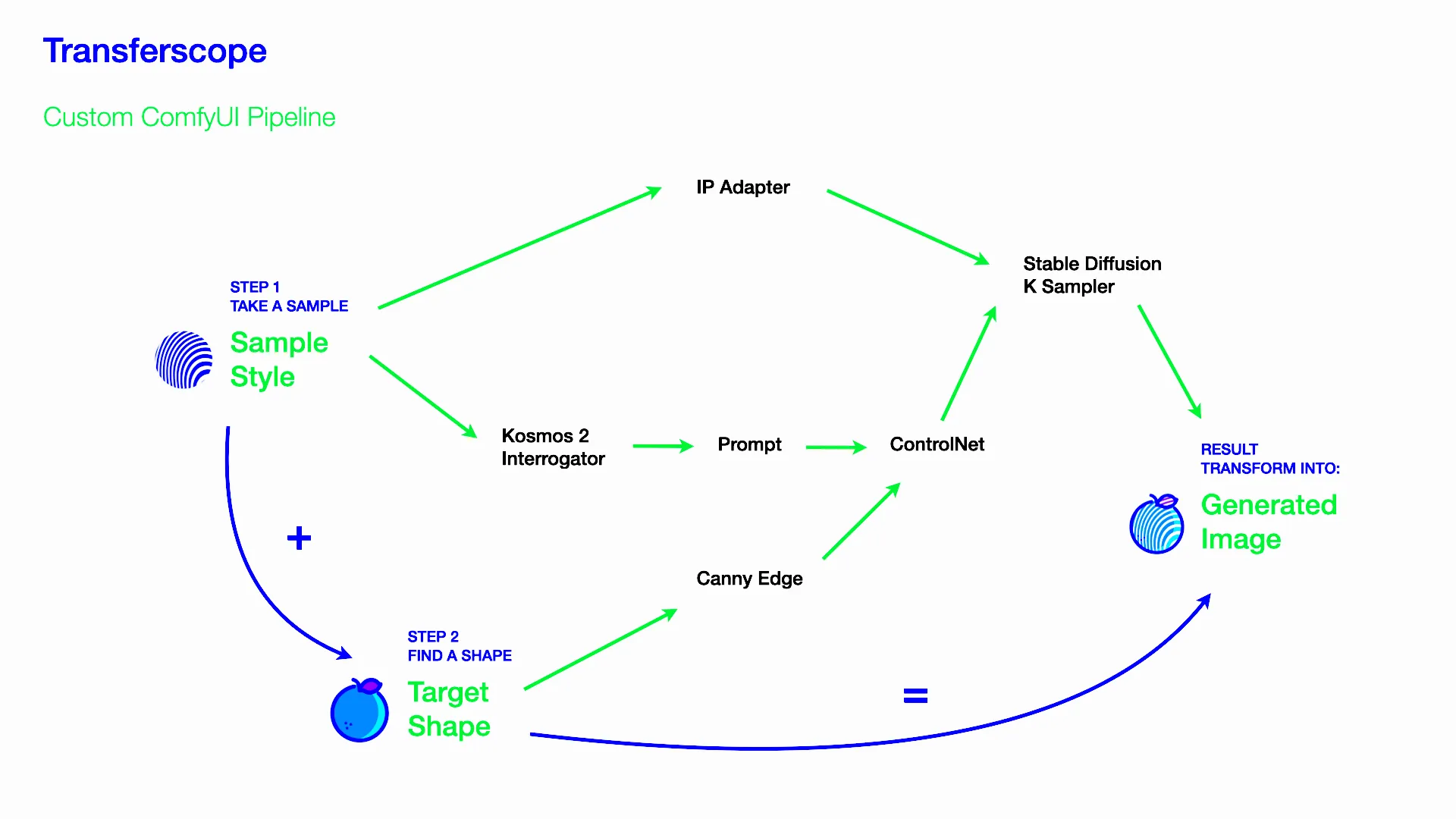
Despite the complexity underneath, the interaction stays almost toy-simple, and that contrast is the point: advanced computation made graspable through a familiar, playful object. The pipeline is built from open-source tools and models: a Raspberry Pi Zero 2 with a Camera Module 3 in a 3D-printed body, capturing the scene and running edge detection in Python and OpenCV; and a GPU server that interprets the image with Kosmos-2 and generates the result in ComfyUI with IP-Adapter, ControlNet, and a Stable Diffusion 1.5 community model with LoRAs.
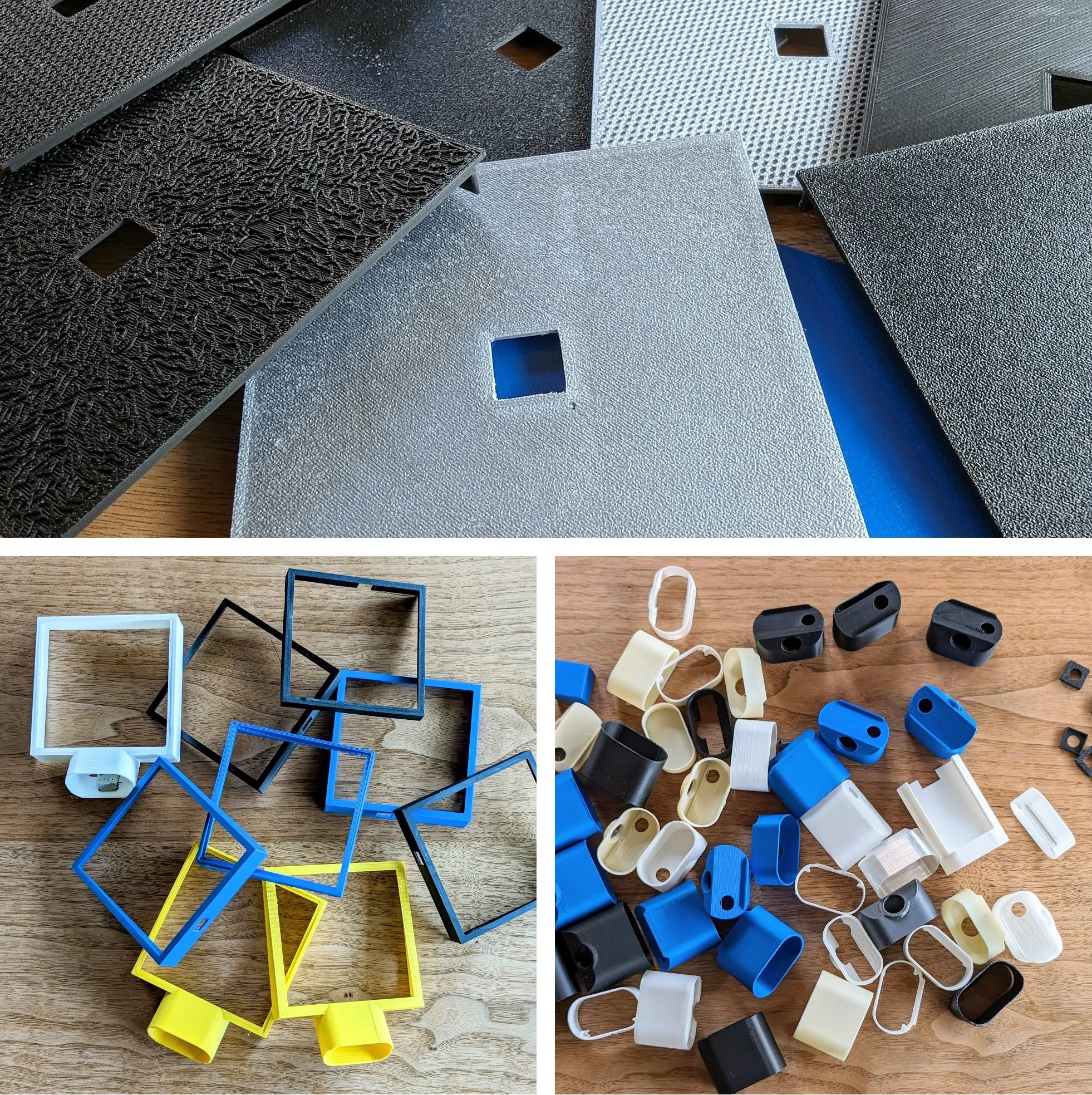
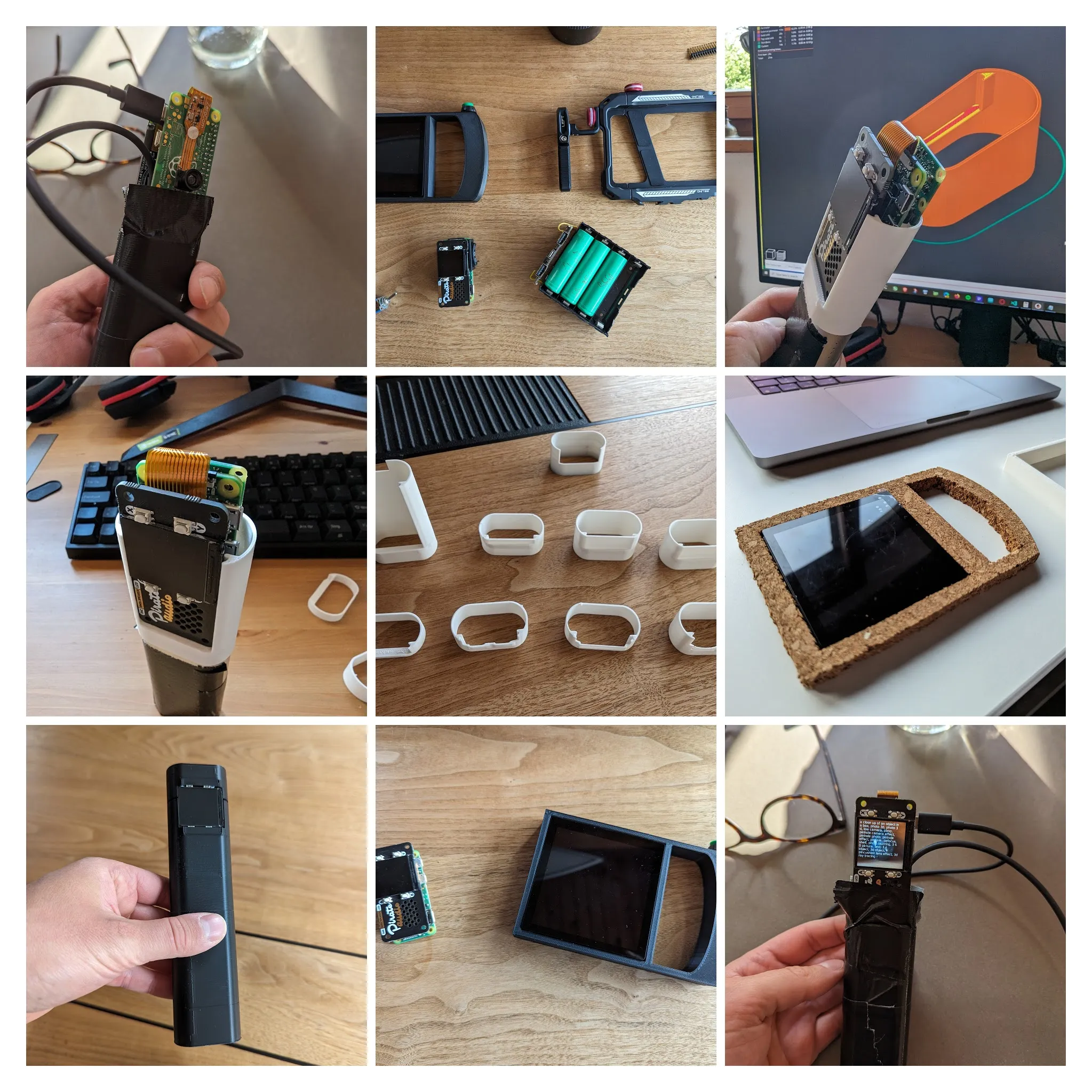
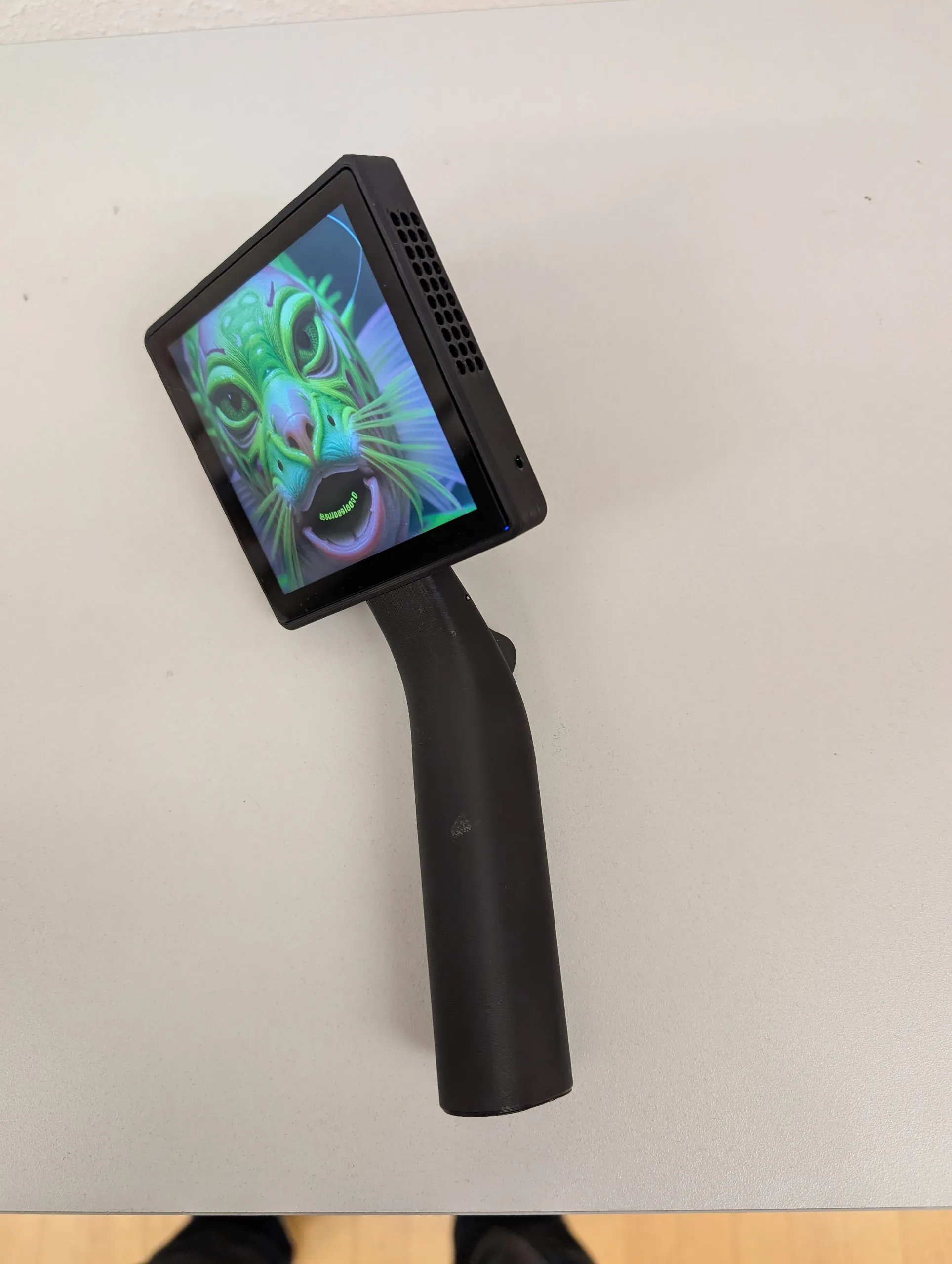
The object itself went through many rounds of 3D-printed prototypes, and consolidates ideas first explored in unStable Mirror; what began as two separate devices merged into a single object with a clearer identity.
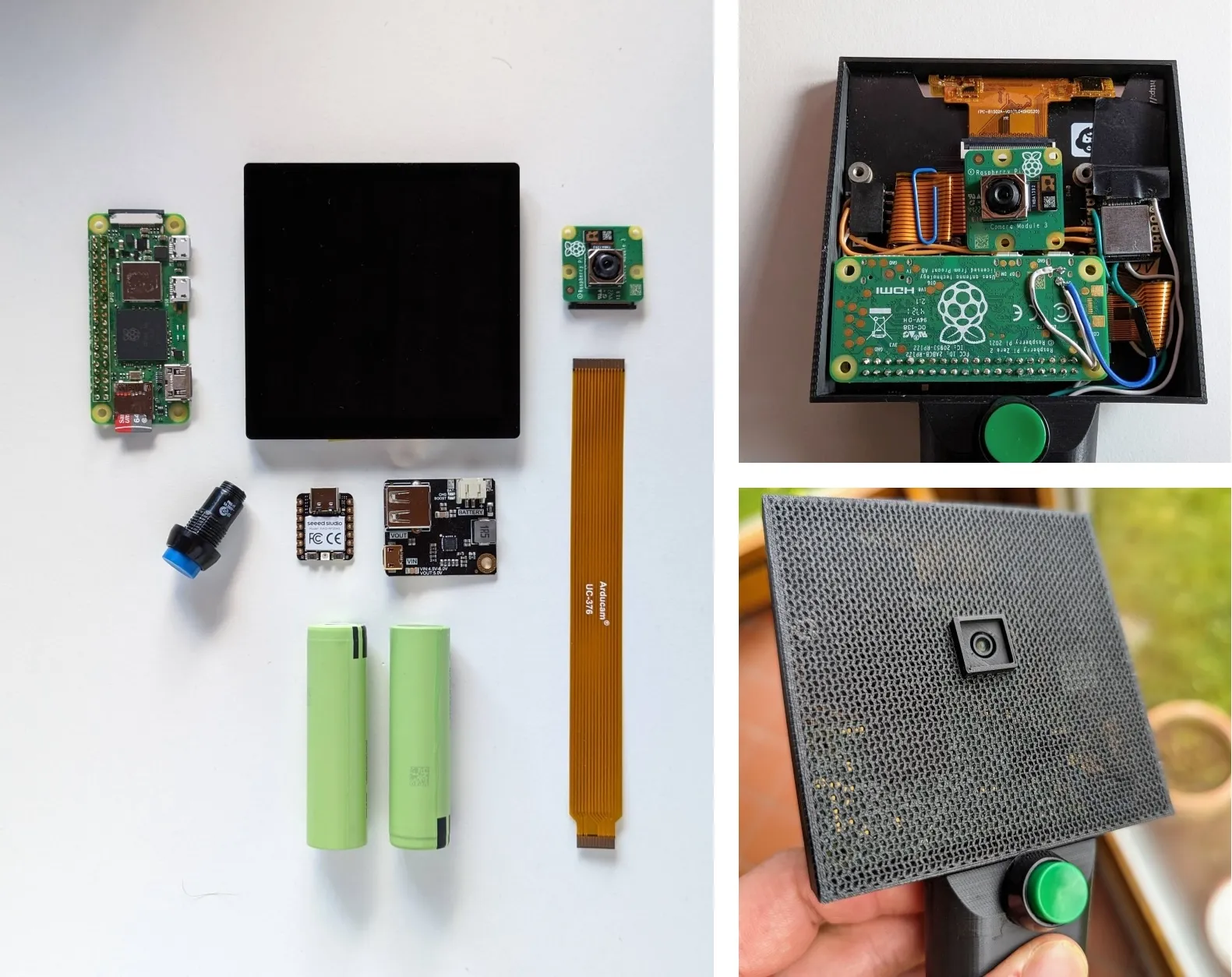
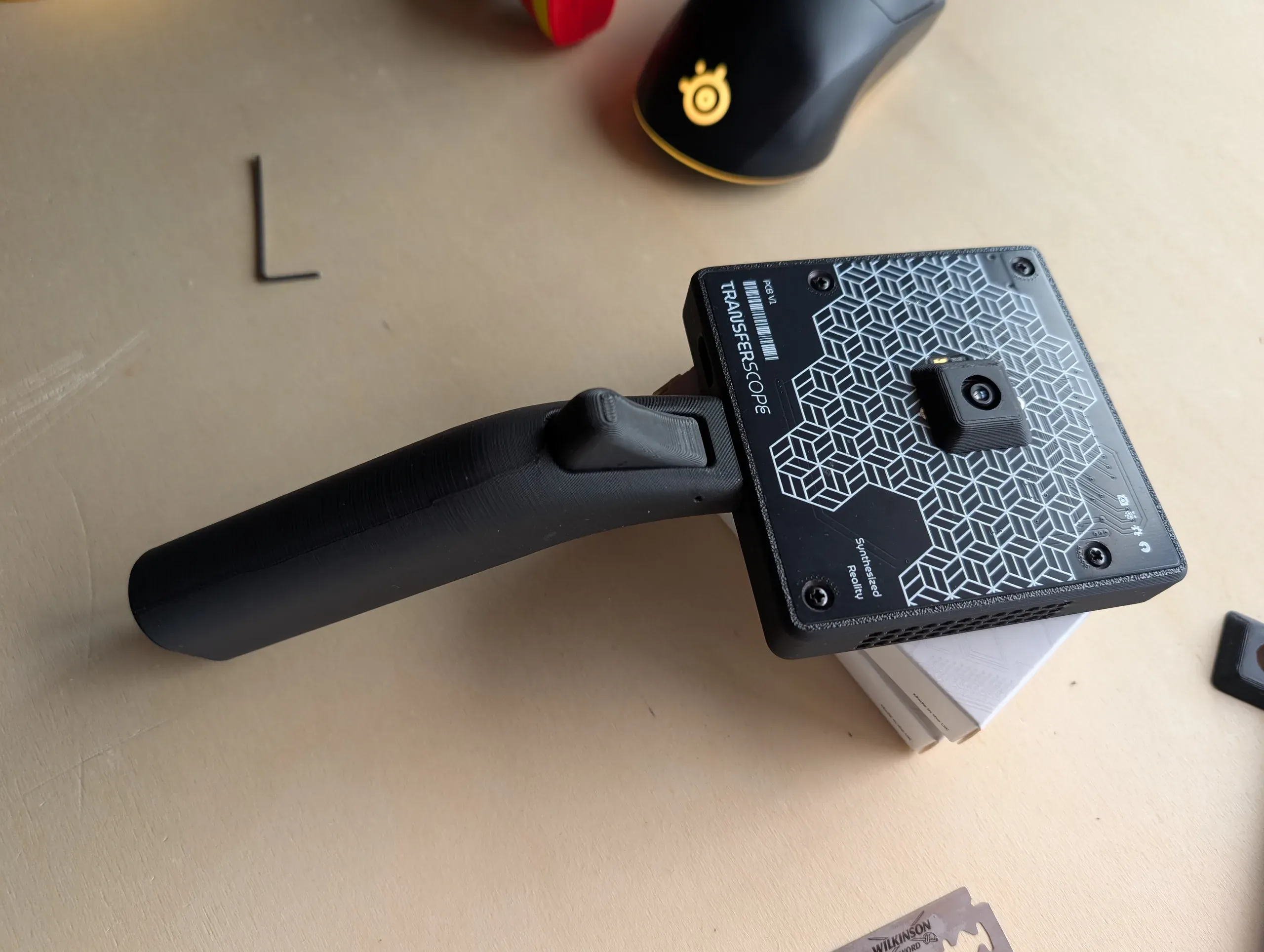
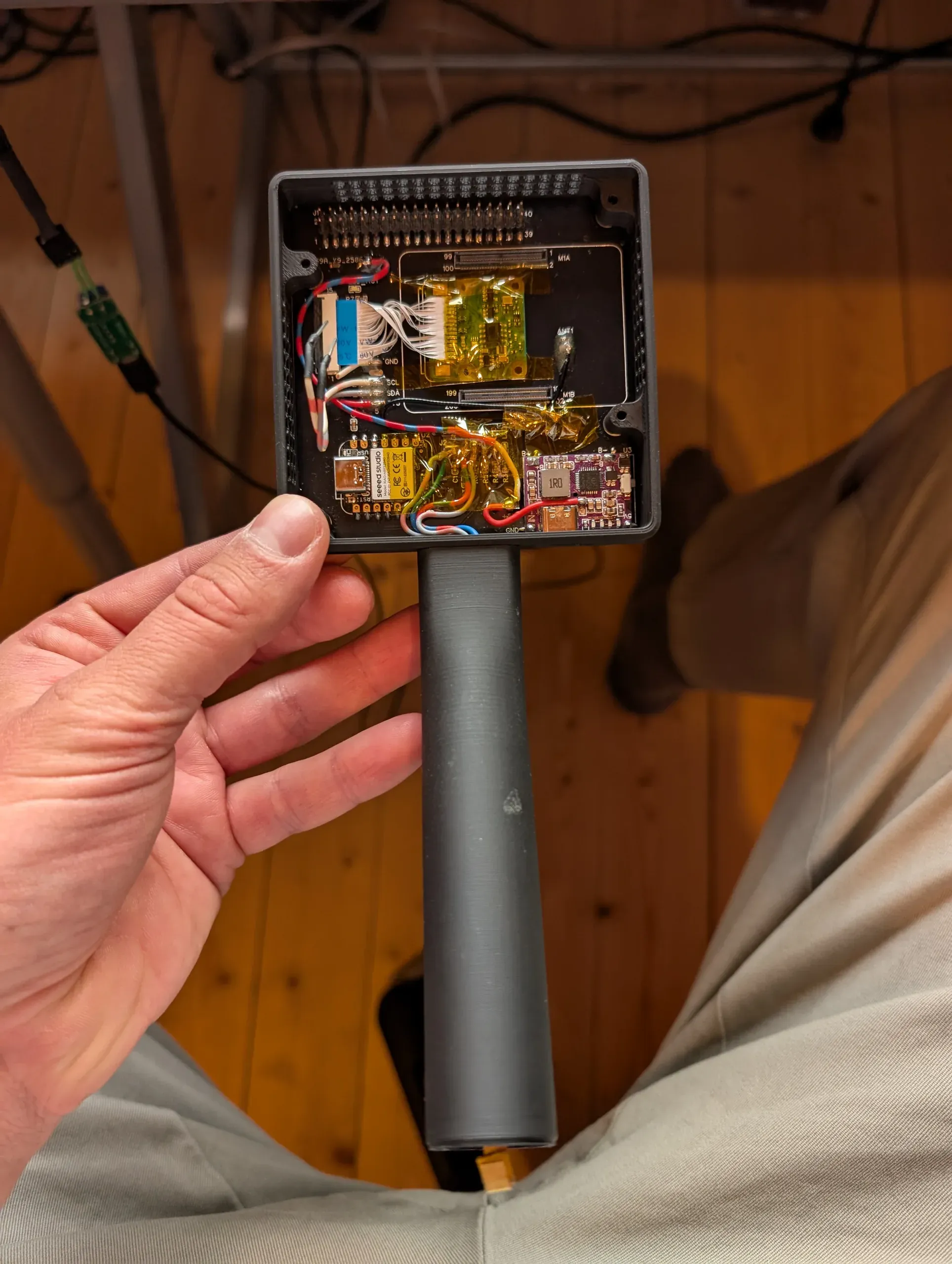
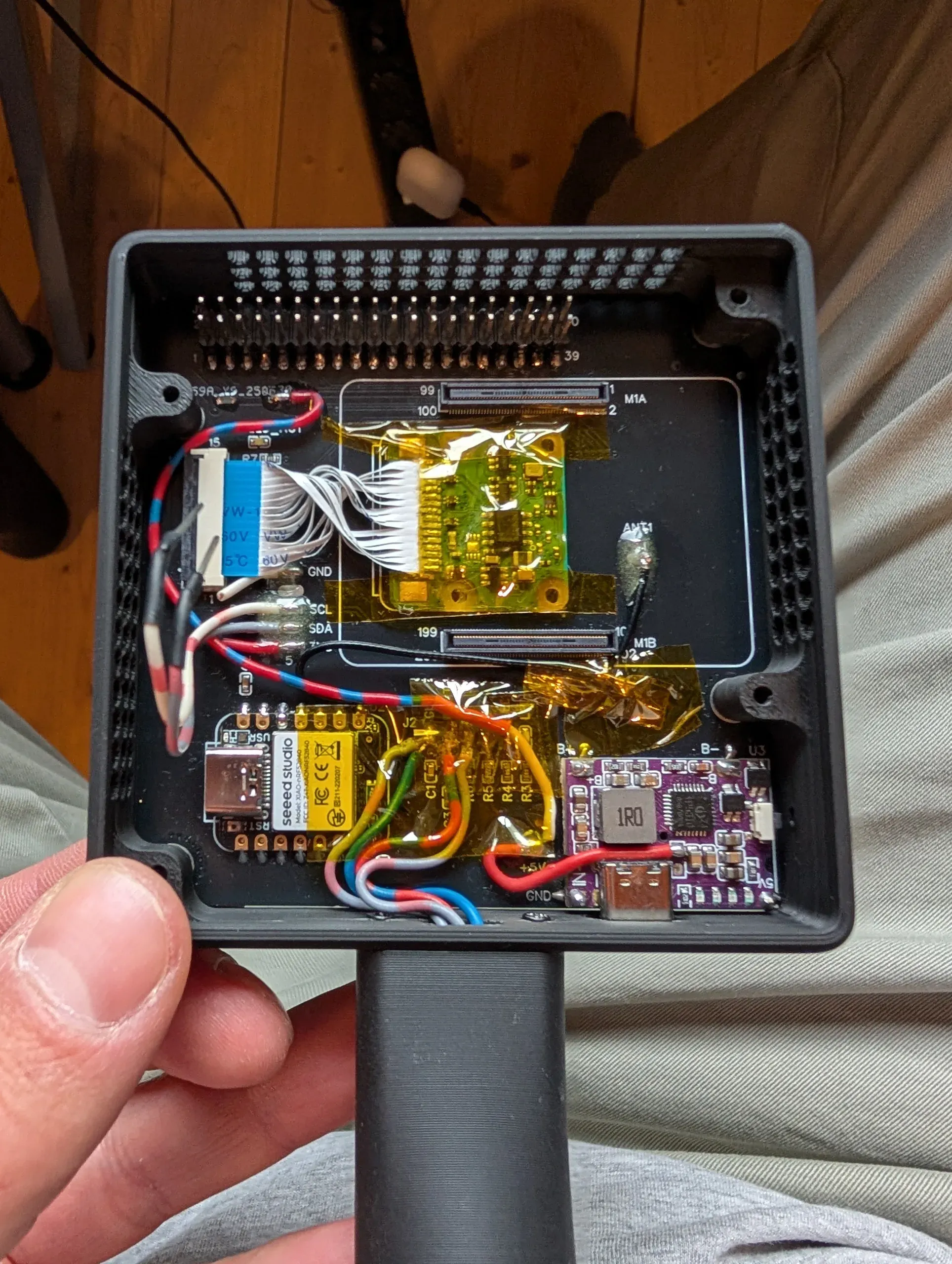
In 2025 Transferscope got a second body: a curved grip with a trigger, and a custom circuit board developed with Johannes Klütsch. The board doubles as the back panel, with the camera set into its center. Its first revision had the ribbon-cable connector laid out mirror-inverted and needed a hotfix.
Transferscope has also found its way into teaching: as device and web platform, it is the technical basis of the “Playful Ideation” module in HfG Schwäbisch Gmünd’s foundational course in AI and design.
A web version runs the same idea from a phone or desktop browser whenever my GPU workstation is serving it; its code is on GitHub.
As generative image technologies keep evolving, Transferscope remains an ongoing inquiry into engaging with AI in ways that feel grounded, material, and situated in the world rather than abstracted behind a screen.
Thanks to the AI+D Lab team, Benedikt Groß, Aeneas Stankowski, Alexa Steinbrück, Rahel Flechtner, Felix Sewing, and Stamatia Galanis, for their support, insights, and patience.
Images
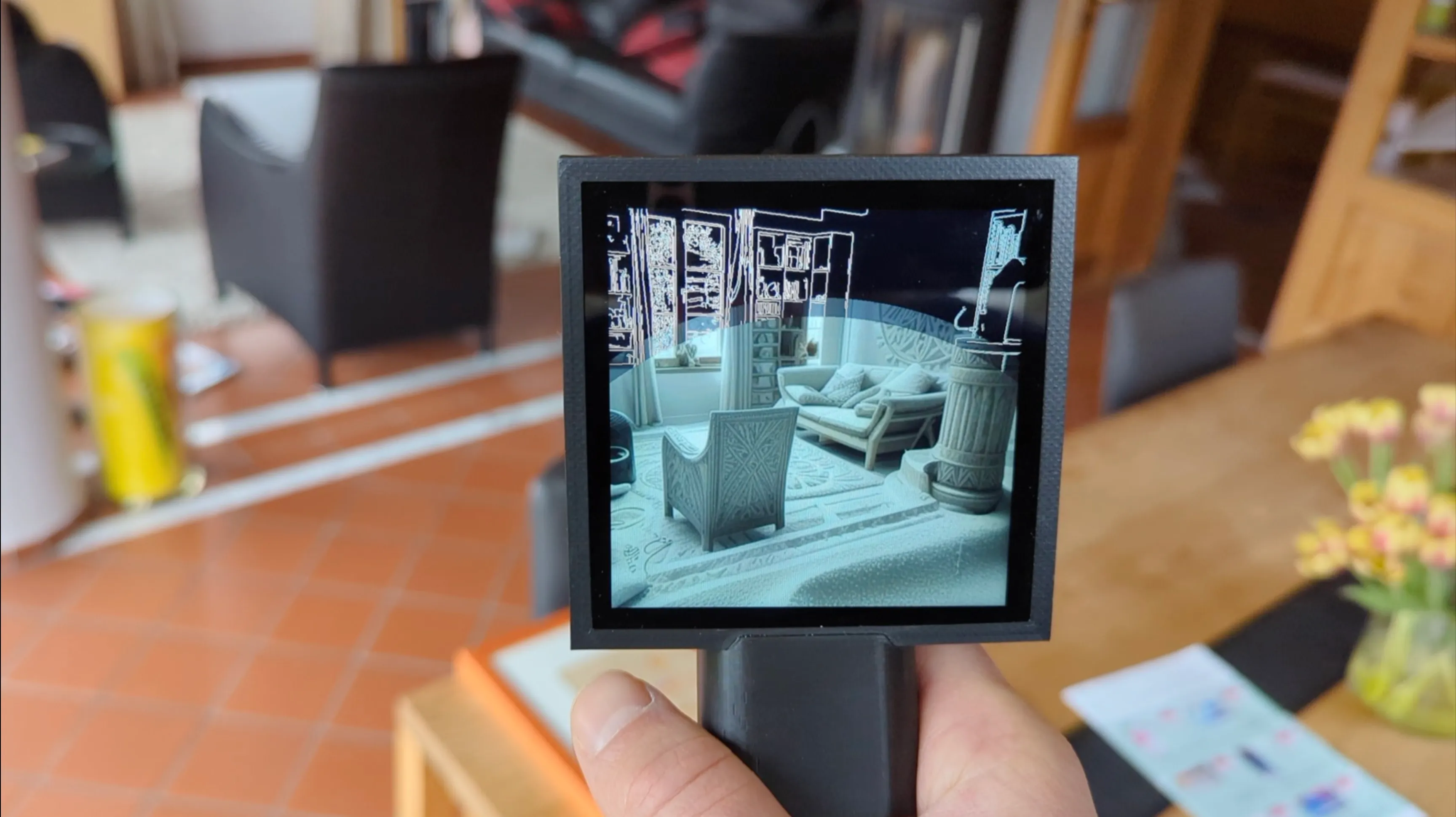
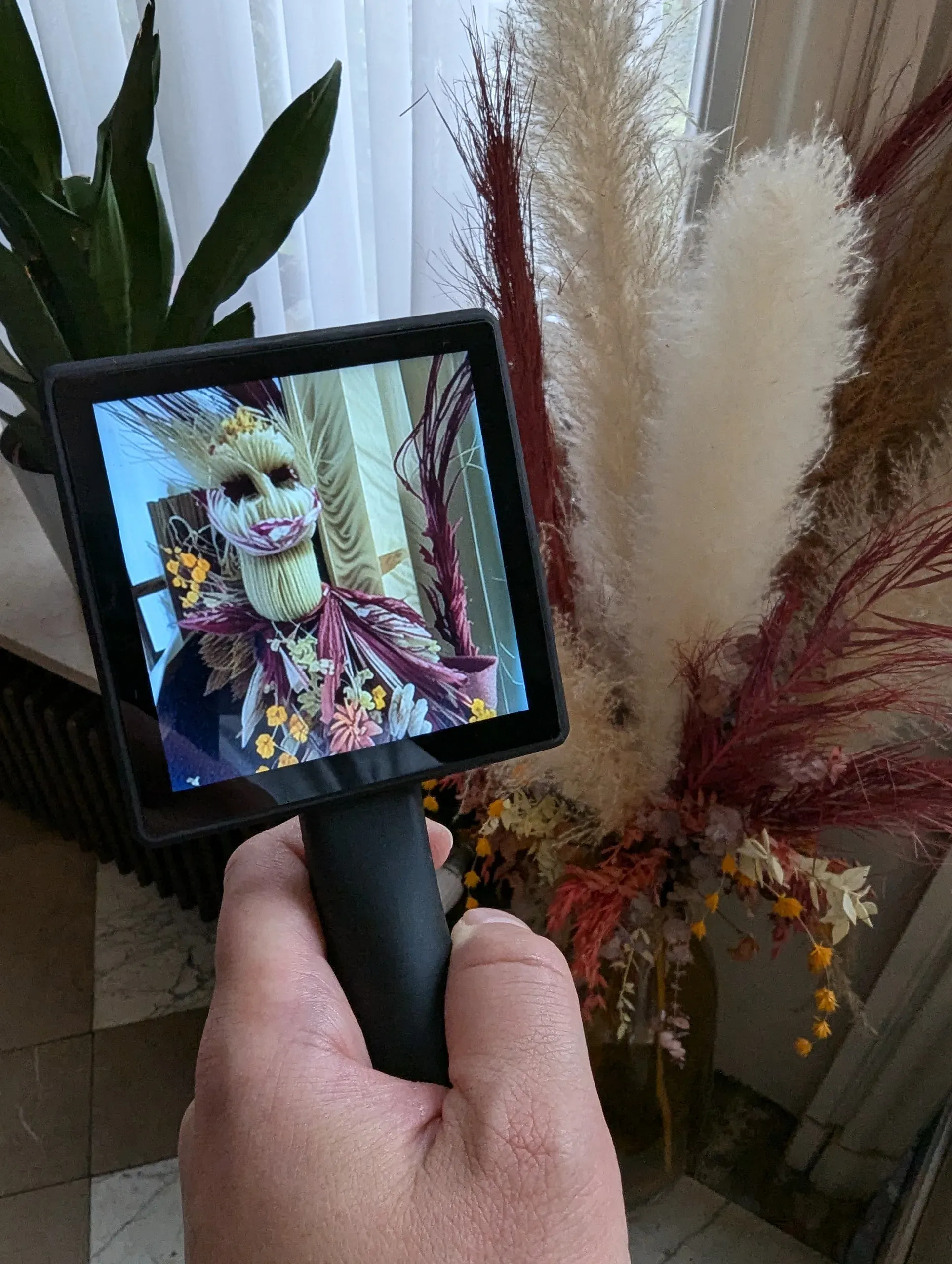
A living room, reinterpreted in the texture of sampled sand
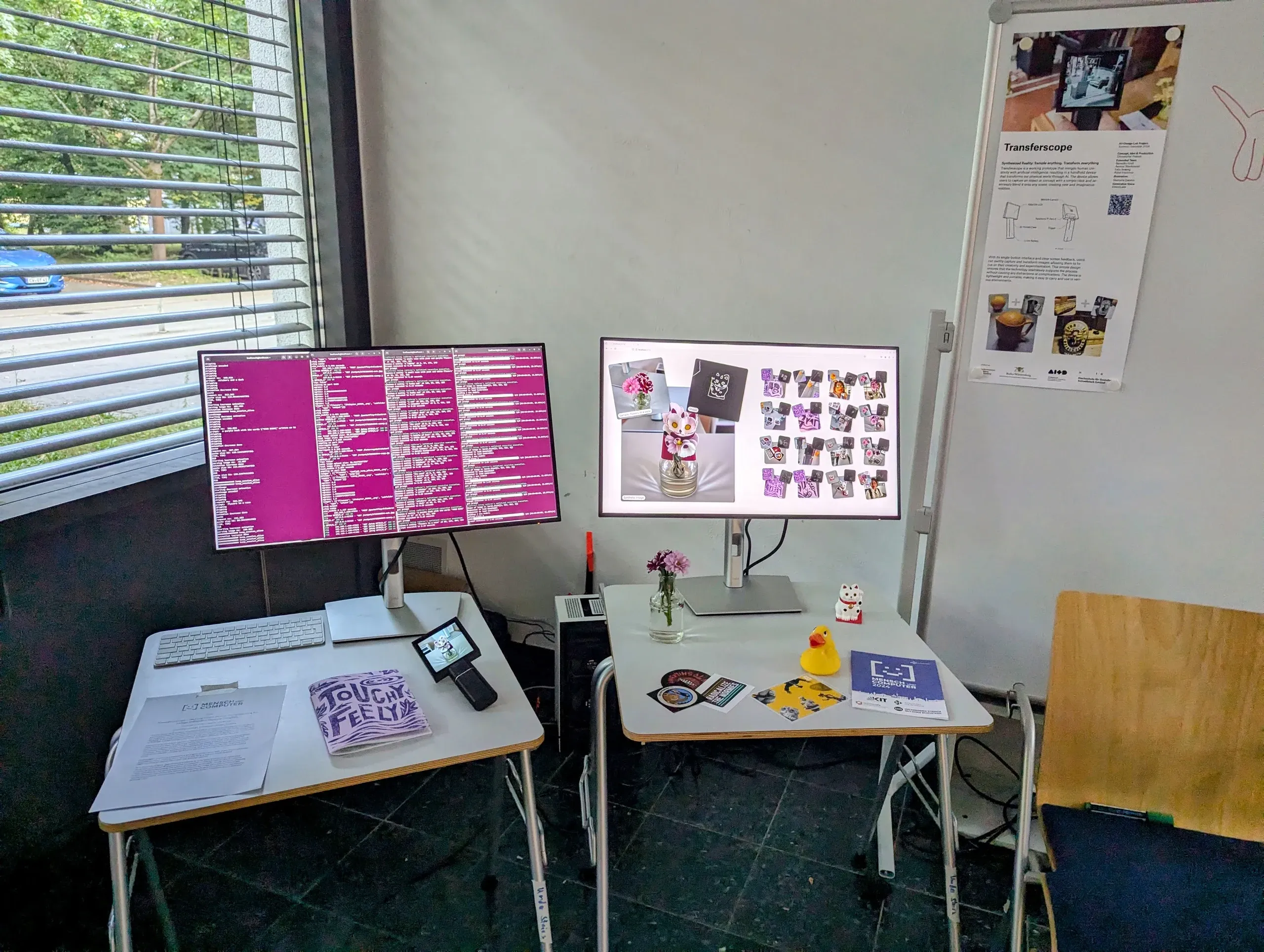
Left and right arrow keys flip through the pile, Enter enlarges the top image.